

Top China Sewer Cleaning Jetting Machine Dealers for Reliable High-Pressure Equipment
2026-09-27
Clogged sewer lines rarely give a warning before they back up, and the wrong jetting machine can turn a routine job into a costly headache. China now produces some of the world's most advanced high-pressure cleaning equipment, but not every dealer will stand behind what they sell. That's why AMJET keeps showing up in conversations among contractors who need dependable performance. Here's a closer look at the top China sewer cleaning jetting machine dealers for reliable high-pressure equipment—and what sets them apart.
Why China’s Jetting Machine Specialists Focus on Pump Longevity Over Peak Pressure Alone
Peak pressure numbers sell brochures, but they rarely reflect how a pump performs after six months of daily use. Chinese jetting machine builders have learned through years of field feedback that contractors care more about uptime and maintenance intervals than a spec sheet figure. So their engineering teams put the durability of the high-pressure pump at the center of every design decision—from the choice of plunger coatings to the geometry of the check valves.
One reason is that most jetting applications don't actually run at maximum pressure for long stretches. A pump rated for 3000 bar may spend most of its life between 1800 and 2400 bar, where heat cycling and seal wear dominate. By focusing on stable flow, tighter tolerances, and better lubrication pathways, Chinese specialists extend the service life of seals and packings well beyond what a peak-pressure-first design would allow. This often means using duplex stainless steel for the fluid end and adding a forced oil lubrication circuit instead of relying on splash lubrication.
That shift in priorities also changes how factories test their machines. Rather than just running a short burst at maximum pressure to validate the rating, they run endurance cycles at varying loads, measuring seal leakage and temperature drift over hundreds of hours. The resulting pumps may not always claim the highest bar number, but they consistently need fewer rebuilds and less downtime in real cleaning, descaling, and surface preparation work.
The Parts That Fail First: What Experienced Dealers Reinforce Before Shipping
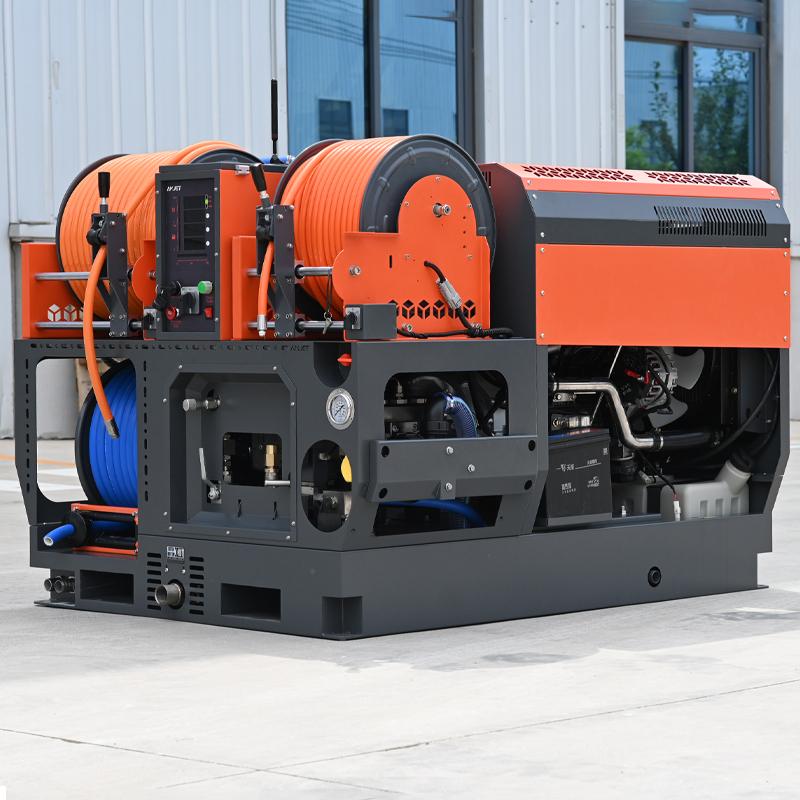
Seasoned dealers don't wait for a call from a frustrated buyer. They know the weak points are rarely the big castings or the frame—it's the rubber, the wiring, and the fasteners that vibrate loose. Before anything goes on a truck, they go through every hose clamp, battery cable, and hydraulic fitting. Old zip ties get replaced with stainless clamps. Cracked loom is rewrapped. Anything that moves against a sharp edge gets a protective sleeve. These are the fixes that cost pennies now and hundreds later, so they get done without being asked.
Bearings and seals are the other quiet killers. A dealer who's been burned before will pop off a hub cap and check for play, then repack or replace anything that feels even slightly rough. Grease points get hit until fresh grease pushes out old. Wheel lug nuts are torqued to spec, not just rattled on with an impact. Electrical connections get dielectric grease, and ground straps are cleaned or upgraded. It's not glamorous work, but it's the difference between a machine that runs for years and one that breaks down in the first month.
Comparing Hose Reel and Nozzle Kits: Where Skimping Shows Up Fast
A side-by-side look at a budget hose reel and nozzle kit usually tells you everything within the first week. On the reel side, the plastic mounting bracket is the first giveaway—it flexes under the weight of a full hose and eventually cracks near the screw holes. The hose guide also tends to be undersized, so the hose kinks right at the reel inlet instead of rolling smoothly. If the reel has a cheap crank handle, it starts slipping or wobbling after just a few uses.
Nozzle kits hide their corner-cutting in the trigger and the internal seals. A flimsy trigger often requires too much finger pressure to hold a steady spray, and the lock-on tab breaks quickly. Inside, cheap O-rings swell or tear when they meet hard water or a bit of grit, leading to drips even when the nozzle is off. The spray pattern selector may feel clicky at first, but the detents wear down fast and the dial becomes mushy or stuck between settings.
What ties both together is that the failures aren't subtle. A good hose reel and nozzle kit should let you pull, spray, and rewind without thinking about the hardware. When corners are cut, the friction, leaks, and broken plastic show up in the first few uses—long before any long-term wear would normally set in.
How Municipal Buyers in Southeast Asia Now Source High-Pressure Units Differently
过去,东南亚许多市政部门依赖中央采购清单或少数国际品牌,选择有限,交货周期长。现在,采购人员开始直接与区域分销商或制造商洽谈,根据实际工况(如街道排水、市场清洁、水处理反渗透系统)定制压力和流量参数,而不只是看额定功率。
另一个明显变化是对本地售后服务的重视。市政买家会优先考虑那些在曼谷、雅加达或胡志明市设有维修车间和备件仓库的供应商,因为高温高湿环境下密封件和阀组损耗更快。合同里往往写明48小时内上门更换易损件,而不是像以前那样设备停摆后等数周寄回原厂。
还有,预算审批流程也在倒逼采购方式改变。越来越多的城市采用租购结合或分批采购模式,先试用几台设备在环卫车队或泵站运行一个雨季,再决定是否批量下单。这使供应商必须提供真实工况测试数据,有时还要配合当地市政的能效审计。
Pressure Ratings Aren’t Everything: Matching Flow Rate to Pipe Diameter and Blockage Type
A pressure gauge can look impressive while the actual cleaning job stalls. What moves debris out of a pipe is not the pressure reading at the pump but the volume of water arriving at the clog, and that depends heavily on pipe diameter. A narrow line chokes the stream, building backpressure and turning powerful pressure into weak flow. Before adding more PSI, it is worth checking whether the hose and nozzle can even deliver enough gallons per minute for the pipe size.
Blockage type changes the calculation again. A soft grease plug may wash away with moderate flow in a wide pipe, while a dense root mass or hardened scale demands sustained velocity and often a larger nozzle orifice to carry solids downstream. Small-diameter residential lines and large municipal sewers need different flow rates not because one is more “powerful,” but because the water must fill enough of the pipe cross-section to push debris instead of simply flowing past it.
Field adjustments matter more than catalog pressure numbers. Running a nozzle that is too small for the pipe creates a fast jet that cleans only a narrow channel, leaving debris on the walls. Oversizing the nozzle wastes water and drops velocity. Matching flow rate to pipe diameter and the texture of the blockage often means swapping nozzles a few times and observing how far the water carries material, which tells you more than any rating stamped on the pump.
From Guangzhou Workshops to Job Sites: The Lead Times and Testing That Actually Matter
Anyone who has coordinated orders from Guangzhou knows the real bottleneck isn't the production line—it's the gap between what the workshop promises and what actually arrives on site. A quoted 20-day lead time often assumes raw materials are already in stock and no design changes occur after the first sample approval. In practice, the clock starts ticking only after the deposit clears and the final CAD drawings are signed off. Factor in public holidays, customs inspections, and port congestion in the Pearl River Delta, and that "twenty days" can stretch to five or six weeks without anyone lying to you. The lead time that matters is the one measured from the moment your purchase order is locked to the day the goods clear your local warehouse, not the date they leave the factory gate.
Testing is where many buyers cut corners and pay for it later. A factory in Guangzhou may show you a certificate that looks impressive, but if it's not tied to your specific batch, it's just wallpaper. The tests that actually matter are the ones performed on randomly pulled production samples—not the golden sample you approved. For hardware and building materials, ask for load ratings, salt spray resistance, and thermal cycling reports that carry the batch number and date. Even better, have a third-party inspector witness the tests at the factory before the goods are packed. The cost is trivial compared to the price of replacing a failing component after it's already been installed on a job site.
The real skill is sequencing. Smart contractors don't treat Guangzhou as a black box; they build in a buffer for the last mile. When the shipment arrives, don't just sign the delivery note. Open a few cartons at random and check the packaging against the test reports. Look for signs of moisture, shifted loads, or substituted fasteners. The lead time and testing that actually matter are the ones you control—the time you give yourself between delivery and installation, and the tests you repeat on your own soil if the project can't afford a failure. That's the difference between a schedule that survives reality and one that only works on a spreadsheet.
FAQ
A dependable dealer typically stocks machines with name-brand pumps and engines, offers transparent specs, and can arrange factory visits or live video demos. They also respond quickly with spare parts and technical guidance after the sale, rather than disappearing once payment clears.
Both matter, but they serve different purposes. Pressure breaks up compacted grease and roots, while flow flushes debris out of the pipe. For most municipal and commercial lines, you want enough flow to carry solids away, not just high pressure that leaves waste sitting in the line.
Many Chinese manufacturers produce heavy-duty trailer- and truck-mounted units that rival imported machines. With the right pump, hose reel, and engine, these units clear large-diameter pipes and long runs. The key is checking the duty cycle and component brands before assuming a lower price means lower capability.
Ask about pump brand and origin, engine or motor options, hose length and diameter, nozzle kits, and whether the unit meets local emission or safety standards. Also request a detailed parts list and confirm how long it takes to ship replacement components.
It depends on the dealer. Good ones keep common wear items like nozzles, seals, and hoses in stock and can ship via express courier within days. Less organized dealers may offer no parts support, which can turn a minor breakdown into a long downtime.
Flush the pump with clean water after every job, inspect and lubricate hoses and couplings, check oil levels, and replace filters on schedule. Winterizing before cold storage prevents cracked pumps and valves, and regular nozzle cleaning maintains consistent pressure.
Look beyond the sticker price at pump quality, hose reel capacity, frame build, and included accessories. A cheap unit with an undersized pump or thin frame may cost more in repairs and downtime than a slightly pricier machine with proven components and local support.
Conclusion
China's top sewer cleaning jetting machine dealers have learned that peak pressure numbers rarely tell the whole story. Instead, they emphasize pump longevity, because a machine that holds 200 bar only matters if it can sustain that pressure through hours of heavy sludge. Experienced dealers routinely reinforce the parts most likely to fail before shipping: ceramic plungers, valve seats, and high-pressure seals. They also pay close attention to hose reels and nozzle kits. Skimping on a swivel joint or using a thinner hose wall shows up within weeks on a job site, not years. A well-built reel with a balanced nozzle set keeps the operator safer and the pipe cleaner. From Guangzhou workshops, many dealers now run each unit through a wet test that cycles pressure up and down, checking for leaks at every fitting before the machine is crated.
Municipal buyers in Southeast Asia have shifted how they source high-pressure units. Rather than asking only about maximum bar, they now match flow rate to pipe diameter and the type of blockage. A narrow residential line with grease needs high flow at moderate pressure, while a storm drain packed with sand demands a different nozzle and pump curve. Dealers who understand this will offer a range of triplex pumps and suggest nozzle orifice sizes instead of pushing one generic trailer. Lead times from Guangzhou have tightened, but the real difference comes from testing under load. Some dealers run a closed-loop test with a dummy pipe section to prove the machine can pull itself through. That kind of pre-delivery check matters more than a spec sheet full of inflated numbers. It is why repeat municipal orders often go to the same small group of Chinese suppliers who treat each unit as a tool for a specific job, not just a pressure rating on a label.
Contact Us
Contact Person: Mike
Email: [email protected]
Tel/WhatsApp: +86 19545555505
Website: https://www.amjeting.com/