

Smart Blinds Factory Innovations Shaping Modern Window Treatments
2026-10-28
Walk into any modern home or office and the windows are no longer just panes of glass—they're becoming dynamic interfaces. Behind this shift is a quiet revolution happening on the factory floor, where smart blinds are being engineered with precision sensors, energy-saving algorithms, and seamless automation. ROLLERGY sits at the heart of this transformation, turning raw materials into intelligent window treatments that respond to light, temperature, and even your daily routines. But what exactly goes into making a blind 'smart'? And why are these factory innovations suddenly reshaping how we think about privacy, comfort, and design? Let's pull back the curtain.
Blinds That React Before You Do
Your windows learn the rhythm of your day before your hand ever reaches for a cord. Embedded light and temperature sensors track how sunlight moves across each room, then pre-adjust the slats seconds before glare would hit your screen or fade your rug.
Instead of programming schedules, the system notices patterns: the way you lower shades every afternoon, the weekend mornings you prefer full brightness. After a short settling-in period, the blinds act on those habits quietly, leaving you to walk into a room that already feels right.
A Factory Floor Built for Precision, Not Just Volume
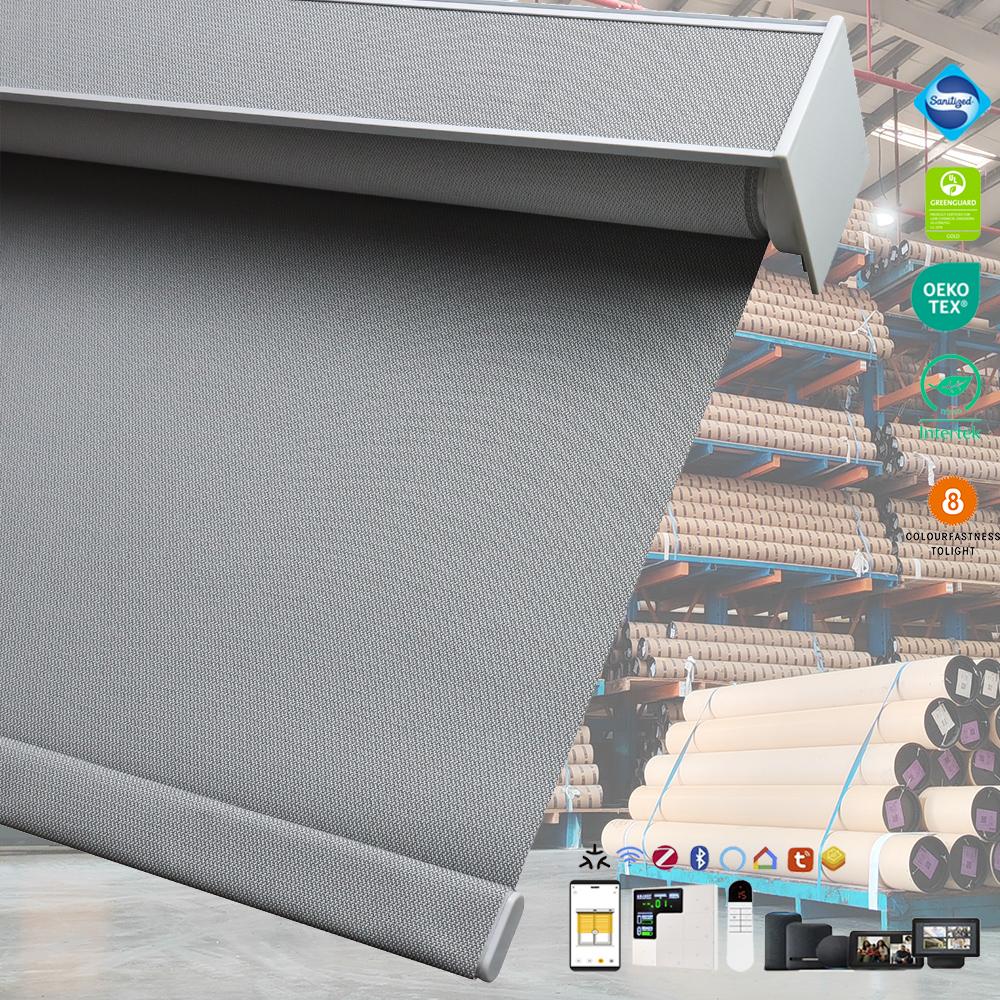
Precision here starts long before a machine switches on. Every workstation is arranged so that tools, materials, and hands move in the shortest possible arc, cutting unnecessary motion out of the process. The floor isn't designed around what's easiest to build; it's designed around what's hardest to get wrong. Markings on the ground aren't decorative, they map exact positions for carts, gauges, and finished pieces, and those positions shift as lean reviews expose better sequences.
Climate and lighting are treated as tolerances, not comforts. Temperature bands stay tight to prevent thermal drift in measurements, while overhead fixtures are angled to eliminate shadows on machined edges. Even the floor coating matters: a low-gloss, static-dissipative surface keeps dust from clinging and lets a dropped screw be spotted in seconds. Small details like that mean a part verified at one station remains identical when it reaches the next.
The result is a line that handles high mix without losing rhythm. Because changeovers are planned around shared fixtures and quick-release tooling, a custom batch can follow a standard run without a long pause. People on the floor aren't waiting for instructions or hunting for missing parts; they're moving through a sequence that leaves little room for variation. That's the difference between making many units and making every unit as if it were the only one.
Quiet Efficiency: How Smart Blinds Cut Energy Bills
Most people assume saving energy means giving up comfort, but smart blinds flip that idea entirely. They work in the background, adjusting themselves based on the sun's angle and indoor temperature, so you never have to think about whether a window is leaking heat in winter or letting in too much glare in summer. The result is a home that stays comfortable while your heating and cooling system runs far less often.
The real savings come from timing. In the morning, the blinds open just enough to let natural warmth in, reducing the load on your furnace. By mid-afternoon, they close automatically on sun-facing windows, blocking the heat that would otherwise force your AC to work harder. It's not dramatic or flashy—it's simply consistent, small adjustments that add up to noticeably lower utility bills over a season.
Homeowners are often surprised by how much of their energy cost is tied to windows alone. With smart blinds, that loss is quietly managed without changing your daily routine. You still get the view, the light, and the privacy you want; the only difference is that your HVAC system gets a break, and your monthly bill reflects it.
From Standard Sizes to Made-to-Measure, Faster
The old trade-off used to be simple: standard sizes arrived quickly but rarely fit perfectly, while made-to-measure meant weeks of waiting and a premium price. That gap is closing fast. New pattern-making software and on-demand production lines can turn a handful of body measurements into a finished garment in days, not months. What once required a tailor’s workshop and several fittings now lives in a digital workflow that adjusts seams, lengths, and proportions before the first cut.
Behind the speed is a shift in how measurements are captured. Instead of relying solely on manual tape measures, brands are using 3D body scanning, smartphone photos, and fit-preference data from past purchases. These inputs feed directly into parametric patterns that adapt to real bodies, not idealized size charts. The result is a made-to-measure piece that feels as deliberate as bespoke tailoring, but moves through production at a pace closer to ready-to-wear.
This faster route changes what customers can expect. A jacket or dress no longer has to be compromised by whatever sizes are left in stock. If standard options don’t work for your shoulders, torso, or inseam, the alternative is no longer a six-week wait. In many cases, you submit your details, receive a preview within hours, and have the finished item shipped within a week. Custom fit is becoming the practical choice, not the exceptional one.
The Hidden Link in Your Smart Home Routine
Most people think their smart home runs on voice commands and phone apps. But the real work happens in a small box tucked behind the router — a hub that translates Zigbee to Wi-Fi, schedules the coffee maker, and keeps your presence sensors from going haywire. When that link degrades, your whole routine feels off, even if every individual device claims to be online.
That hidden link isn't just hardware. It's the quiet logic of automations that prioritize your habits over your commands. A well-tuned routine anticipates the creak of the hallway floor at 6:40 a.m., nudges the thermostat before you reach for a sweater, and dims the bathroom light to 20 percent because it learned you hate full brightness before sunrise. Strip away that connective tissue, and you're left with a pile of expensive gadgets shouting for attention.
So before you blame the voice assistant or replace a bulb, check the invisible seam where devices actually talk to each other. Often, a single outdated driver or a mislabeled room can fracture the whole sequence. The fix is rarely glamorous — updating firmware, renaming a scene, moving a hub six inches higher — but it restores the flow that makes a smart home feel less like a tech demo and more like a place that knows you.
Durable by Design, Not by Accident
Longevity rarely happens by luck. Every joint, seam, and stress point is mapped, tested, and reworked until it holds up under conditions harsher than everyday use. That’s the quiet work behind a product that still feels solid years later—no squeaks, no loosening, no slow drift toward failure.
Materials get chosen for how they age, not just how they look on day one. Coatings are measured in cycles, fabrics are stretched and scrubbed before approval, and hardware is cycled until the numbers prove it can outlast the warranty. When a design survives this process, durability stops being a selling point and starts being a baseline.
That shift—from hoping it lasts to knowing it will—only comes from treating endurance as a requirement from the first sketch. Every revision closes a weak point. Every prototype gets abused on purpose. The result isn’t just something that resists wear; it’s something that was built to make wear irrelevant.
FAQ
The biggest shift is modular assembly. Instead of wiring each blind by hand, factories now use snap-in motor cartridges and pre-calibrated light sensors, which cuts installation defects and lets homeowners swap out components without replacing the whole unit.
They're moving away from exposed wiring. Wood and bamboo slats get micro-routed channels for flat ribbon cables, then sealed with a thin polymer layer. That keeps the organic look while protecting the circuitry from humidity and repeated rolling.
It's mostly about installation convenience. Factories are laminating flexible photovoltaic strips along the top valance, so the blind trickle-charges its battery from daylight. That removes the need to run power cables to every window and makes retrofit projects far less invasive.
There's a noticeable shift back to tactile controls. While app and voice integration remains standard, factories are adding low-profile capacitive touch rails and discreet manual overrides, because homeowners don't want to reach for a phone just to tilt the slats.
Brushless DC motors with nylon composite gears are becoming the default. They run at lower RPM with higher torque, so blinds move smoothly without the high-pitched whine that older stepper motors produced, and they last longer under daily automation routines.
Instead of accepting the standard half-inch side gaps, some factories now machine interlocking side channels into the frame and use thin magnetic strips along the slat edges. When the blind lowers, it pulls slightly outward to seal against the channel, which noticeably improves blackout performance.
Beyond basic cycle testing, the better facilities run accelerated UV exposure on fabric samples, salt-spray tests on motor housings, and wireless interference checks with common home routers. They also simulate repeated obstruction stops to make sure the blind reverses gently rather than burning out the motor.
Conclusion
Modern smart blinds have moved far beyond simple remote control. The newest factory lines embed sensors and learning algorithms directly into the shade mechanism, so the blinds adjust to shifting sunlight or room occupancy before you even reach for a switch. This is not mass production for its own sake—the assembly floor uses laser-guided cutting and automated calibration to hold tolerances tighter than a millimeter, while still turning out made-to-measure window coverings in days rather than weeks. The result is a product that fits odd-shaped windows precisely and responds to daily routines without being programmed.
That quiet responsiveness pays off in practical ways. By tracking solar gain and interior temperature, smart blinds trim HVAC loads enough to lower energy bills noticeably, yet they operate so smoothly you rarely hear them move. They also slip into existing smart home setups as an invisible link—pairing with lighting, thermostats, and security systems to create scenes that feel natural rather than scripted. Underneath it all, the materials and gearing are chosen for decades of daily use: reinforced cords, corrosion-resistant rails, and motors tested beyond their rated cycles. The factory may be high-tech, but the goal is old-fashioned—blinds that simply work, year after year.
Contact Us
Contact Person: Vivien Cheng
Email: [email protected]
Tel/WhatsApp: +86 13751758835
Website: https://www.rollergytech.com/