

Rubber Machinery Manufacturer Guide to Boosting Production Efficiency
2026-10-09
Rubber molding and extrusion lines rarely fail all at once—they lose efficiency in small, compounding ways: a few extra seconds per cycle, an unnoticed temperature drift, a press that idles longer than it should between shifts. For manufacturers, these hidden leaks turn into thousands of dollars in lost output before anyone spots the pattern. This guide maps the most common production bottlenecks in rubber machinery and the practical, equipment-level fixes that restore speed without sacrificing quality. Along the way, you’ll see how AUGU AUTOMATION helps plants turn those fixes into measurable gains—so the next efficiency review starts with fewer surprises.
Rethink Rotor Clearance Before You Add Another Mixer
Most plants jump straight to purchasing an additional mixer when batch times creep up or blend quality dips. That instinct often misses the real bottleneck: rotor clearance. A few millimeters of extra gap between the rotor and chamber wall lets material slip past unmixed, forcing you to run longer just to hit the same spec. Before you sign off on another capital expense, measure what your current unit is actually doing.
Worn rotors, misaligned shafts, or housing deformation all widen the gap over time. Even if the mixer still sounds normal, the clearance might be double the original tolerance. This shows up as longer cycle times, higher energy draw without a matching output gain, and inconsistent color or particle distribution in the batch. Operators often compensate by slowing feed rates or raising temperatures, which masks the problem instead of fixing it.
Bringing the rotor back to its designed clearance usually costs a fraction of a new mixer and can restore output within days. It also gives you a cleaner baseline before you evaluate whether extra capacity is truly needed. In many cases, the "extra" mixer would just be covering for a maintenance issue that will eventually cause a shutdown anyway.
The Extruder Temperature Setting That's Quietly Raising Scrap Rates
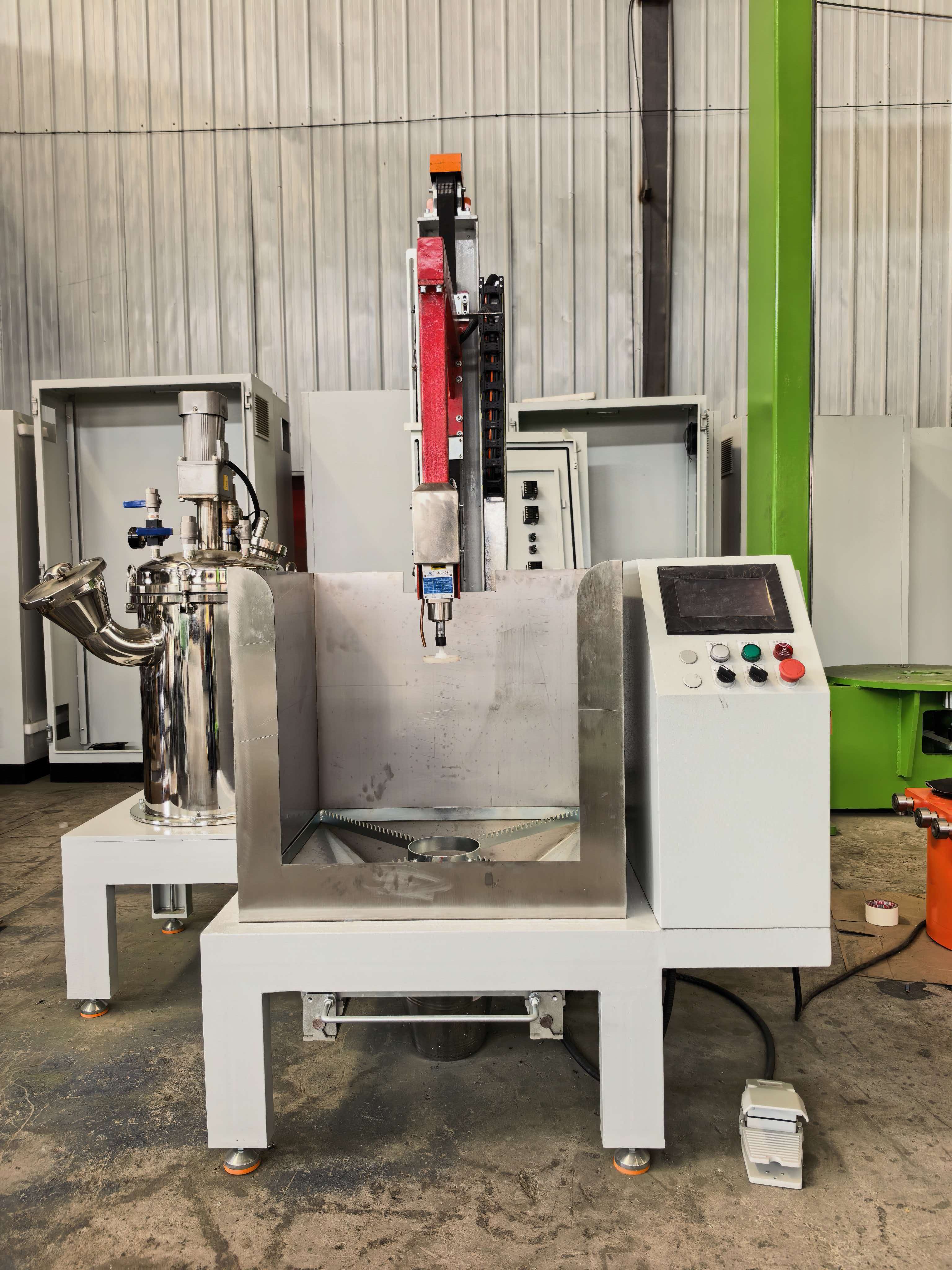
A few degrees might not look like much on the control panel, but running an extruder even 5°C above the resin supplier's recommended melt temperature can quietly push scrap rates upward. Many operators raise barrel temperatures to reduce motor load or chase a smoother surface, yet the extra heat accelerates polymer degradation, especially in heat-sensitive materials like rigid PVC or certain nylons. The result isn't always a catastrophic burn, but a slow buildup of gels, black specks, and dimensional drift that shows up as rejects further down the line.
The problem often hides in the middle zones, where thermocouples read the steel temperature rather than the melt temperature. By the time the melt reaches the die, shear heating may have added another 10-15°C that no one sees on the display. This hidden overshoot changes viscosity enough to alter wall thickness, ovality, or surface gloss, and because the symptoms appear intermittent, the team chases downstream issues instead of checking the actual melt temperature with a probe.
Fixing it rarely means a dramatic overhaul. Dropping the barrel setpoints by just a few degrees and verifying melt temperature at the die can stabilize output and reduce scrap without sacrificing throughput. Some plants have found that a lower, more uniform profile actually improves mixing and reduces wear on screws and barrels, which means the scrap rate falls for reasons beyond the obvious thermal degradation.
Why Monitoring Viscosity in Real Time Beats Lab Testing After the Batch
Lab viscosity checks often arrive too late to matter. By the time a sample reaches the bench and the results come back, the batch has already moved downstream. Real-time monitoring changes that calculus entirely—it gives operators a continuous pulse on fluid behavior while there’s still time to adjust mixing speed, temperature, or additive dosing. Instead of waiting for a retrospective pass/fail, the line becomes self-correcting. That kind of immediacy turns viscosity from a quality gate into an active control variable, and that shift is where the real savings hide.
There’s also the problem of what a lab sample actually represents. A single grab from the top of a tank or a tap along the pipe tells you almost nothing about what’s happening in the other 90% of the volume. Real-time sensors, especially inline or in-tank designs, average out spatial and temporal variation without any manual sampling bias. You catch stratification, dead zones, and transient viscosity spikes that a once-a-batch test could never see. And because the data streams continuously, trends become visible long before they cross a threshold—so you’re not asking “did it pass?” but “is it drifting where I don’t want it to go?”
Cost follows the same logic. Relying on lab results means holding batches in quarantine, reworking off-spec material, and burning analyst hours on tests that only confirm what you already suspect. Real-time viscosity monitoring slashes that wait time, reduces rework by catching deviations early, and frees lab staff for method development or troubleshooting instead of routine assays. The instrument pays for itself not through a single dramatic moment but through dozens of small avoided losses every week.
A Faster Cure Cycle Doesn't Mean Buying New Presses
Many print shops assume that shortening a cure cycle requires investing in a new press or an expensive add-on dryer. That assumption rarely holds up. The bottleneck often isn't the machinery itself, but how the existing heat is being applied, monitored, and adjusted. A press that is already in good mechanical condition can usually be brought to a faster cure through better airflow, accurate temperature profiling, and a willingness to test ink-deposit weights against actual substrate behavior.
Start by mapping the real temperature at the substrate surface, not just the air temperature inside the dryer. Small differences in belt speed, lamp intensity, or exhaust balance can leave a garment under-cured while the control panel reads perfectly fine. Recalibrating sensors, cleaning reflectors, and evening out the heat across the width of the belt frequently cuts 10 to 20 percent off the dwell time without any new equipment. In many cases, the problem is not that the press lacks power, but that the power is being wasted in uneven hot and cold zones.
Finally, look at the ink system itself. A lower-cure additive, a better-matched white underbase, or simply reducing the mesh count in high-ink areas can let you lower the dryer temperature or increase the belt speed while still hitting the required wash-fastness. The fastest shops are not the ones with the newest presses; they are the ones that understand their existing cure window precisely and stop treating the dryer as a fixed black box.
Stop Letting Mill Heat Escape: Recover It Instead
Every rolling mill radiates a staggering amount of thermal energy into the air—heat that has already been paid for, generated, and then simply discarded. Walk through most production floors and you'll feel it: a constant, invisible leak from furnaces, reheat zones, and cooling beds. Rather than treating this as an unavoidable byproduct, plant operators are discovering that capturing even a fraction of that wasted heat can slash fuel consumption and shorten payback periods on new equipment.
The principle is straightforward but often overlooked in day-to-day operations. Heat exchangers, recuperators, and steam generators can be retrofitted onto exhaust stacks or placed near hot strip runout tables. The recovered energy doesn't need to be exotic—preheating combustion air, warming process water, or feeding a low-pressure steam header for nearby cleaning stations all deliver immediate value. One mid-sized section mill redirected flue gas from its reheat furnace to preheat billets, cutting natural gas use by nearly a fifth without any change to rolling schedules.
Skeptics often worry about maintenance complexity, but modern recovery systems are built for harsh mill environments. Simple plate-and-frame exchangers, self-cleaning cyclones, and modular economizers can handle dust, scale, and temperature swings with minimal intervention. The real barrier is habit: for decades, excess heat was treated as free and forgettable. The mills that succeed are those that map out every exhaust point, measure actual temperatures and flow rates, then install the cheapest recovery option first. Small wins build the case for larger investments, turning waste heat from a silent cost into a dependable resource.
Line Balancing for Multi-Spec Runs Without Guesswork
Balancing a line that switches between product specs usually falls apart when cycle times are averaged across the mix. A workstation loaded to 92% on paper may actually run at 115% for one spec and 70% for another, creating bottlenecks that only appear on certain shifts or batches. Instead of relying on a single takt time, break each spec into its own task sequence and assign operator times for the variants that actually differ—fastener counts, test durations, label changes, torque patterns, etc. Then run a precedence-weighted balance for each spec and overlay the results to find which stations carry the most variant-sensitive load.
A practical method is to build a small matrix: rows are stations, columns are product specs, and each cell holds the manual + machine time for that spec at that station. Sum across columns using the real production mix, not a flat average. If Spec A runs 60% of the time and Spec B 40%, a weighted load of 88% can hide a 103% peak on Spec A days. Adjust assignments so the worst-case column stays under your target, and use the matrix to pre-stage tools or instructions for quick changeovers rather than rebalancing on the fly.
For multi-spec runs, the goal is not perfect balance for every spec—that rarely exists. The goal is to make the imbalance predictable and contained. Move variant-sensitive work to stations with spare capacity in the mix, sequence runs so high-load specs don't stack against breaks or material deliveries, and review the matrix every time a new spec or major revision enters the schedule. That turns line balancing from a one-time calculation into a repeatable, evidence-based routine.
FAQ
Many plants overlook hydraulic oil cleanliness and filter replacement intervals. Contaminated oil degrades valve response and causes erratic clamping pressure. Also, neglecting platen parallelism checks after die changes leads to uneven part thickness and premature mold wear. A weekly inspection of heater bands for hot spots and torque checks on electrical connections prevent sudden downtime.
One approach is optimizing the cure time by running a rheometer curve on each new compound batch rather than relying on nominal specs. Adjusting injection speed profiles to fill cavities before scorch occurs, while using vacuum-assisted venting, often shaves several seconds. Preheating inserts and using hot runner systems where feasible also cut down the time rubber spends in the mold.
Skilled operators catch subtle changes in noise, temperature, or flash formation that automated sensors miss. Training focused on reading viscosity variations and adjusting backpressure or screw speed prevents many small defects from becoming batch rejections. Cross-training on press and extruder operations also reduces idle time when a specialist is absent.
Yes, retrofitting existing presses with linear transducers for real-time ram position and cavity pressure monitoring is relatively low cost. Adding a simple shuttle conveyor or automatic ejector system removes manual part handling delays. Even a basic barcode scanning system for compound batches reduces mixing errors and lets you trace quality issues faster.
Barrel heaters on extruders and calendar rolls often run at full wattage when the machine is idle between runs. Installing insulated blankets and PID-based temperature controllers with standby setpoints cuts energy use by 15-25%. Recovering heat from hydraulic power units to preheat feed material is another underused tactic.
Compare the cost of a full rebuild including new platens, hydraulic seals, and updated controls against the lost production from frequent breakdowns and slower cycle times. If the frame is still rigid and the platens can be reground to within 0.05 mm flatness, a rebuild often extends life by 10 years at half the cost of new. But if the control system lacks modern safety features or spare parts are obsolete, replacement makes more sense.
Track cycle time variance, scrap rate by defect type, and energy consumption per kilogram of finished product. Also monitor mean time between failures for each machine and the average mold changeover time. Sudden increases in cycle time variance usually indicate inconsistent material feed or worn check rings, while rising energy per kilogram points to insulation or heater control problems.
Often yes. A poorly designed runner system or inadequate venting forces the press to use higher injection pressure and longer cure times. Investing in cold runner blocks or balanced runner layouts reduces flash and material waste, and allows the same machine to run more cavities per cycle. Simple changes like adding tear strips or improving ejector pin placement can cut demolding time by 30%.
Conclusion
Most plants chasing higher output assume the fix is another mixer or a bigger press. That instinct often leads straight past the real bottlenecks. Rotor clearance on an internal mixer drifts more than many realize, and resetting it to the spec for the compound often restores dispersion and cuts drop temperature without any capital spend. On the extrusion side, a small temperature offset that looks harmless can push scorch risk up and quietly raise scrap rates. Real-time viscosity feedback from the mixer or extruder gives operators a chance to adjust the batch while it is still workable, instead of waiting for lab results after the fact.
Cure cycle times rarely need a new press. Re-evaluating mold temperature uniformity, press closing speed, and compound flow can shave seconds or minutes from each cycle with existing equipment. Waste heat from mills is another overlooked asset. Capturing it for preheating feed stock or factory water reduces energy load and stabilizes processing conditions. Finally, multi-spec runs benefit from line balancing built on actual changeover data rather than guesswork. Sequencing similar compounds and clearing bottlenecks at the mill or batch-off keeps lines moving without idle time. Together, these adjustments compound into steady throughput gains that are cheaper and faster than adding machinery.
Contact Us
Contact Person: Lareina
Email: [email protected]
Tel/WhatsApp: +86 17561696737
Website: https://www.auguauto.com/