

Rotary Concrete Reclaimer Manufacturer Insights for Concrete Batching Plant Efficiency
2026-09-19
Every cubic meter of returned concrete eats into your plant's margins—unless you have the right reclamation system. Rotary concrete reclaimers are often the missing piece in batching plant efficiency, yet many operators overlook how manufacturer design choices directly impact recovery rates, water reuse, and maintenance downtime. Sinou, a manufacturer with a track record in heavy-duty reclamation equipment, brings some counterintuitive insights to the table. What if the biggest efficiency gain isn't in the mixer but in how you handle what comes back?
Where the Reclaimer Sits Matters More Than Most Plants Assume
A reclaimer placed a few meters too far from the pile can quietly add thousands of dollars a year in extra travel time, fuel, and cable wear. Most layout drawings treat it as a fixed-point machine, but its position shapes how the whole yard breathes. If it can't reach the oldest material without a long slew, operators start taking shortcuts—pulling from the easiest face instead of the right one—and blend consistency slips before anyone notices.
Foundations and rail alignment often get locked in before the maintenance team has a say. When that happens, the machine ends up sitting where the ground drains poorly or where a future conveyor extension will pinch access. A spot that looks fine on a top-down plan can become a daily headache once lube points are buried behind a bent chute, and the only fix is an expensive shutdown.
Smart plants now walk the yard with a different question: not just "can it reach," but "what does it force us to do next." That shift in thinking usually moves the reclaimer to a spot that shortens reclaim cycles, protects the pile's natural angle of repose, and leaves room for the second machine nobody has budgeted for yet.
Rotary Drums Against Vibrating Decks for Fine Aggregate Recovery
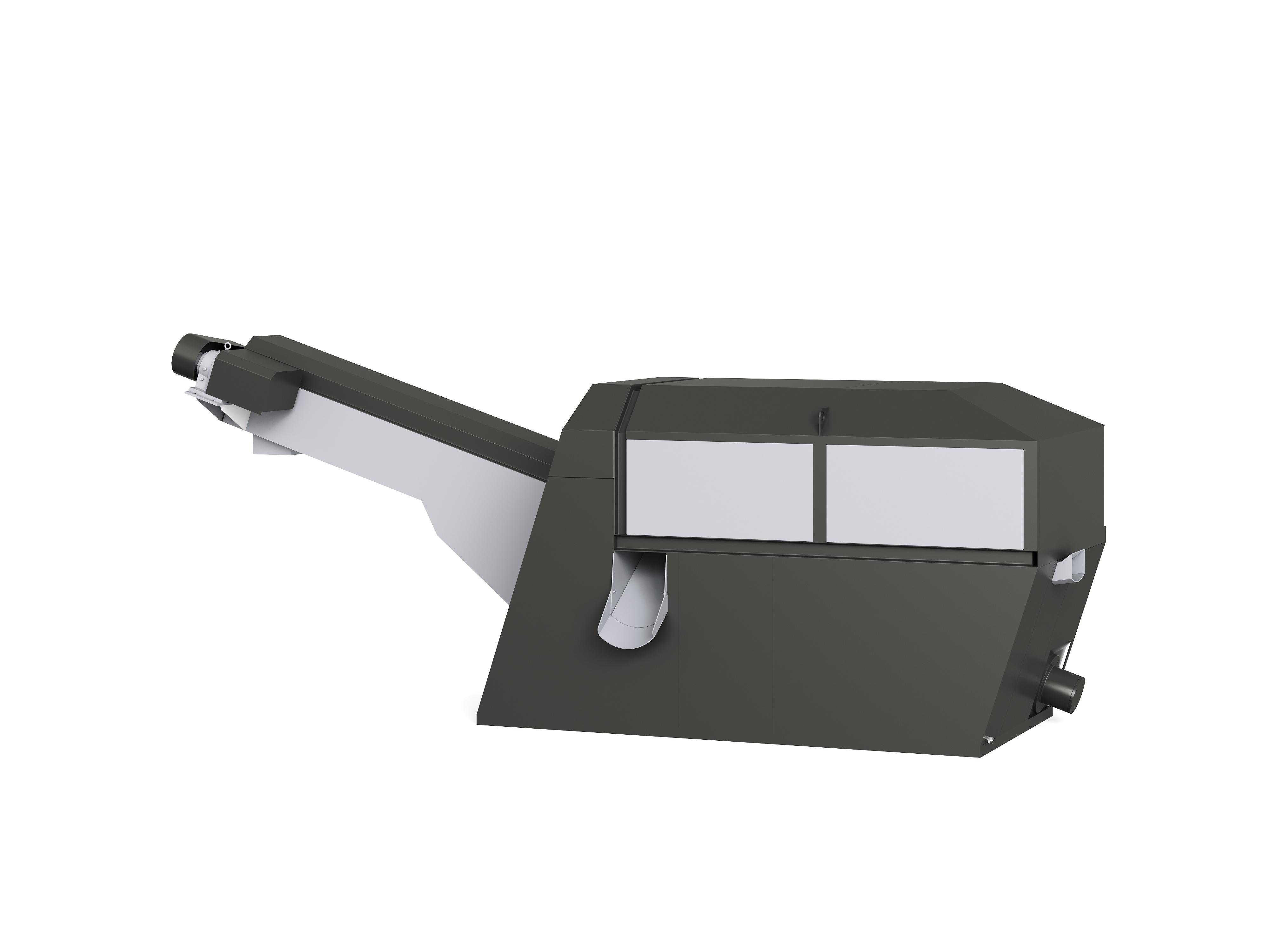
In fine aggregate recovery, rotary drums and vibrating decks attack the same problem from opposite angles. A rotary drum turns slowly, letting slurry roll and slide inside so fine particles drop out without being battered. Vibrating decks, by contrast, use rapid oscillation to stratify the bed and push material across the screen surface. That speed helps with throughput, but it also creates localized wear patterns and can bounce near-size particles over the openings.
Maintenance tells a different story. Rotary drums have fewer high-frequency components; the drive ring and support rollers handle most of the load, and wash bars can be replaced without pulling the whole drum. Vibrating decks demand constant attention to screen tension, spring health, and exciter bearings. When fine aggregate carries clay or moisture, the screen cloth on a vibrating deck often blinds over within a shift, while a rotary drum’s tumbling action tends to peel sticky material away from the openings.
Site conditions usually decide which one makes sense. A compact plant with limited height may favor a vibrating deck because it can be installed at a steep angle and still move material quickly. A wash plant dealing with highly variable feed or fibrous debris will often keep a rotary drum on the critical path because it tolerates surges without immediate plugging. In practice, the best recovery circuits run both: the drum handles the first heavy separation, and the vibrating deck polishes the undersize before it reaches the sand screw or cyclone.
The Water Math Most Closed-Loop Systems Get Wrong
Most closed-loop operators trust the original fill records or a rough pipe-length estimate, then wonder why inhibitor levels never match the lab report. The real culprit is usually the forgotten volume sitting in expansion tanks, heat exchanger shells, and oversized headers that never made it into the as-built drawing. When you dose to a number that is 15 to 30 percent below the actual system volume, every subsequent chemical reading becomes a fiction, and corrosion or fouling gets a head start before anyone notices.
Another persistent mistake is borrowing math from open cooling towers and trying to force it onto a closed loop. People subtract evaporation losses that do not exist, or they add makeup water based on blowdown cycles that never happen. In a tight closed loop, the only real losses are leaks, sampling, and occasional venting—so the math should track small, deliberate losses, not pretend the loop is breathing like a cooling tower. Otherwise the system gets diluted with unnecessary fresh water, and the inhibitor concentration slowly drifts below the threshold that actually protects metal.
The most damaging error, though, is calculating chemical additions from chiller tonnage instead of measured water volume. A 400-ton machine tells you almost nothing about whether the loop holds 600 gallons or 2,200 gallons, yet many maintenance sheets still use a flat “gallons per ton” multiplier. Until someone runs a proper volume check—using a calibrated fill meter, a tracer study, or draining a known section—every ppm target is just a hopeful guess dressed up as math.
Wear Sleeves, Seals, and the Service Intervals Suppliers Rarely Print
Most rotating equipment depends on two cheap components that quietly prevent expensive failures: wear sleeves and shaft seals. A wear sleeve slides over a scored or worn shaft area, giving the seal a smooth surface to ride on. The seal keeps lubricant in and contaminants out. Together they form a sacrificial pair—when either degrades, the other follows quickly.
Yet ask any supplier for a printed service interval for these parts and you'll likely get a shrug. Rarely does a catalog list "replace sleeve every X hours." The reason is simple: wear rates swing wildly with shaft speed, runout, temperature swings, abrasive media, and how carefully the equipment was aligned. A sleeve that lasts five years in a clean water pump might fail in six months on a slurry mixer. Suppliers know this, so they avoid publishing numbers that could be misapplied.
That shifts the burden to maintenance teams. Instead of chasing a magic interval, watch for early signals: oil weeping past the seal, a polished groove on the sleeve, rising bearing temperatures, or slight shaft play. Many plants now use condition-based triggers—replace the sleeve when lip contact marks deepen beyond 0.25 mm, or when a seal leaks twice within a month. Combine those observations with your own failure history, and you'll build a schedule that outperforms any generic chart.
Lab Claims Versus Batch Floor Reality for Reclaimed Slurry in the Mix
The numbers from the bench top rarely survive first contact with the reclaim tank. A slurry that tests at 12 percent solids under a stir plate will arrive at the batch floor with pockets of settled material, shifting moisture by the minute. Operators who trust the lab sheet without watching the agitator speed or the return-line temperature end up chasing slump with extra water, which quietly changes the water-cement ratio the mix design assumed.
Then there is the timing problem. Lab samples are usually pulled after full circulation, but on a busy pour day the slurry may sit for twenty minutes before the weigh batcher calls for it. Solids drop out, density shifts, and the batch computer still doses by volume. The result is not a failed test, it is a passed test that no longer describes the material in the pipe. That gap is where cracked floors and low breaks come from.
The fix is not more lab tests. It is comparing the lab's assumed solids content with what the batch operator actually sees at the discharge gate, then adjusting the batching sequence to match the slurry's real behavior. Until that comparison becomes routine, the lab claim remains a clean number on a clipboard, and the floor keeps dealing with a different mix altogether.
Retrofitting a Tight Batching Plant Without Adding a Single Square Meter
Space constraints often force batching plant managers to choose between boosting output and keeping the existing footprint. One retrofit approach starts with mapping every piece of equipment and material flow, then removing or relocating underused buffer zones. By shifting aggregate storage from ground-level bins to vertical silos with a shared conveyor, the same plot gains enough room for a second mixer line or a faster weigh batching system.
A second lever is swapping legacy components for compact, high-throughput alternatives. Twin-shaft mixers with shorter cycle times can replace older single-shaft units, while inline moisture probes cut the need for separate sample stations. Control cabins can be moved onto a mezzanine above the compressor room, freeing floor space for cement delivery routing that previously looped around the site perimeter.
Finally, process sequencing matters as much as hardware. Retiming truck entry and loading queues to match batch cycles reduces the need for a large waiting area. Using a small automated shuttle for aggregate transfer eliminates wide loader turning radii. The result is a plant that handles more cubic meters per hour without expanding its boundary by a single square meter.
FAQ
Focus on manufacturers with a proven record in aggregate recovery rates, low-maintenance drum designs, and responsive after-sales support. Check whether they offer custom sizing to match your plant's daily pour volume and space constraints.
It separates sand, cement slurry, and coarse aggregate from returned concrete, letting you reuse materials instead of paying disposal fees. Plants often see lower raw material costs and less downtime spent cleaning truck mixers.
Routine nozzle checks, drum screen inspections, and scheduled greasing of trunnion wheels prevent most stoppages. Keeping the settling tank clear and monitoring water pH also helps protect the internal components from buildup.
Look for a drum with a sloped, self-cleaning screen, heavy-duty drive system, and corrosion-resistant steel. Adjustable water spray bars and a dewatering screen that handles variable slump returns make a big difference in daily recovery volume.
A good manufacturer will evaluate your current layout, washout area, and mixer fleet before recommending a reclaimer size. They can suggest concrete chute extensions, pump upgrades, or water recycling loops that avoid costly civil work.
Yes, especially if you currently pay for washout disposal or lose aggregate to settling ponds. Most operators recover initial costs within 18 to 30 months through lower raw material purchases and reduced truck cleaning time.
Undersizing the drum for peak return days, ignoring water chemistry, and picking a supplier without local parts support are frequent errors. Always ask for reference sites with similar mixer counts and pour schedules.
Conclusion
Most concrete plants treat the reclaimer as an afterthought, parking it wherever there is spare concrete pad. That is a costly mistake. Where the unit sits relative to truck washout lanes, aggregate stockpiles, and settling basins changes how much sand and stone actually come back into the batching cycle. A rotary drum placed too far from the discharge point tends to lose fine material in transit, while one tucked against the right wall can feed directly into a loader path without extra handling. On the recovery side, rotary drums continue to outperform vibrating decks for fine aggregate because they keep the aggregate tumbling through water instead of relying on screen vibration that blinds with slurry. And then there is the water math. Most closed-loop systems are sized on paper using clean water volumes, but real washdown water carries cement fines, admixtures, and temperature swings. If you do not account for that, recycled water density drifts, and your mix water ratio goes off before anyone checks the slump.
Wear parts tell a similar story. Sleeves and seals on rotary reclaimers are rarely listed with honest service intervals because actual abrasion depends on aggregate shape, daily cycles, and how much sand stays in the sump. Plants that track sleeve wear by the hour, not by the month, end up replacing parts before they fail and avoid the weekend shutdown that eats two days of production. Lab data for reclaimed slurry often says you can replace 20 to 30 percent of mix water without strength loss, but on the batch floor the slurry varies load to load. The real fix is to blend reclaimed water with fresh water in a holding tank and verify slump and air every few batches instead of trusting a single lab curve. For plants with no room to expand, retrofitting a rotary reclaimer into a corner next to the existing wash rack, sometimes by raising it on a small platform or rerouting a drain line, can reclaim the same material without adding square meters. It is about rethinking flow, not pouring more concrete.
Contact Us
Contact Person: HaiYan
Email: [email protected]
Tel/WhatsApp: +86 18957325588
Website: https://www.senyoubeton.com/