

OEM Beer Mug Manufacturer Tips for Custom Branded Glassware
2026-10-28
Great branded glassware doesn’t start with a logo—it starts with the right OEM beer mug manufacturer. If you’ve ever watched a custom pint glass crack in the dishwasher or a decal peel after three washes, you know the frustration. That’s why smart buyers look past the sample photo and ask about glass composition, annealing, and print durability before placing an order. APEXAL has spent years turning those technical details into mugs that feel good in hand and keep your brand visible long after the first pour. In this guide, we’re sharing practical tips for custom branded glassware that avoid common OEM pitfalls—so your next run doesn’t just look good on day one, but after hundreds of uses.
Questions to Ask Before You Commit to a Manufacturer
Before signing anything, dig into how the manufacturer handles quality hiccups. Ask for a concrete example of a recent production issue and walk through how they caught it, contained it, and communicated with the client. If they can't give you a specific story with real numbers or timelines, that's a red flag. You want a partner who treats mistakes as part of the process, not as secrets to bury.
Pricing transparency is another make-or-break area. Request a full breakdown of tooling, per-unit costs, minimum order quantities, and any fees for design changes or rush orders. A manufacturer that hesitates to show line items or tries to bundle everything into one vague quote often hides margin surprises later. Compare at least three quotes side by side, but don't just pick the cheapest — look for who explains the "why" behind each cost.
Finally, test their communication speed and clarity before you commit. Send a thoughtful question about materials, lead times, or compliance certifications and see how long it takes to get a useful answer. Do they answer directly, or do they deflect with sales language? A manufacturer that is slow or vague during the courtship phase will almost certainly be worse once your production schedule depends on them.
Logo Placement Tricks That Survive the Dishwasher
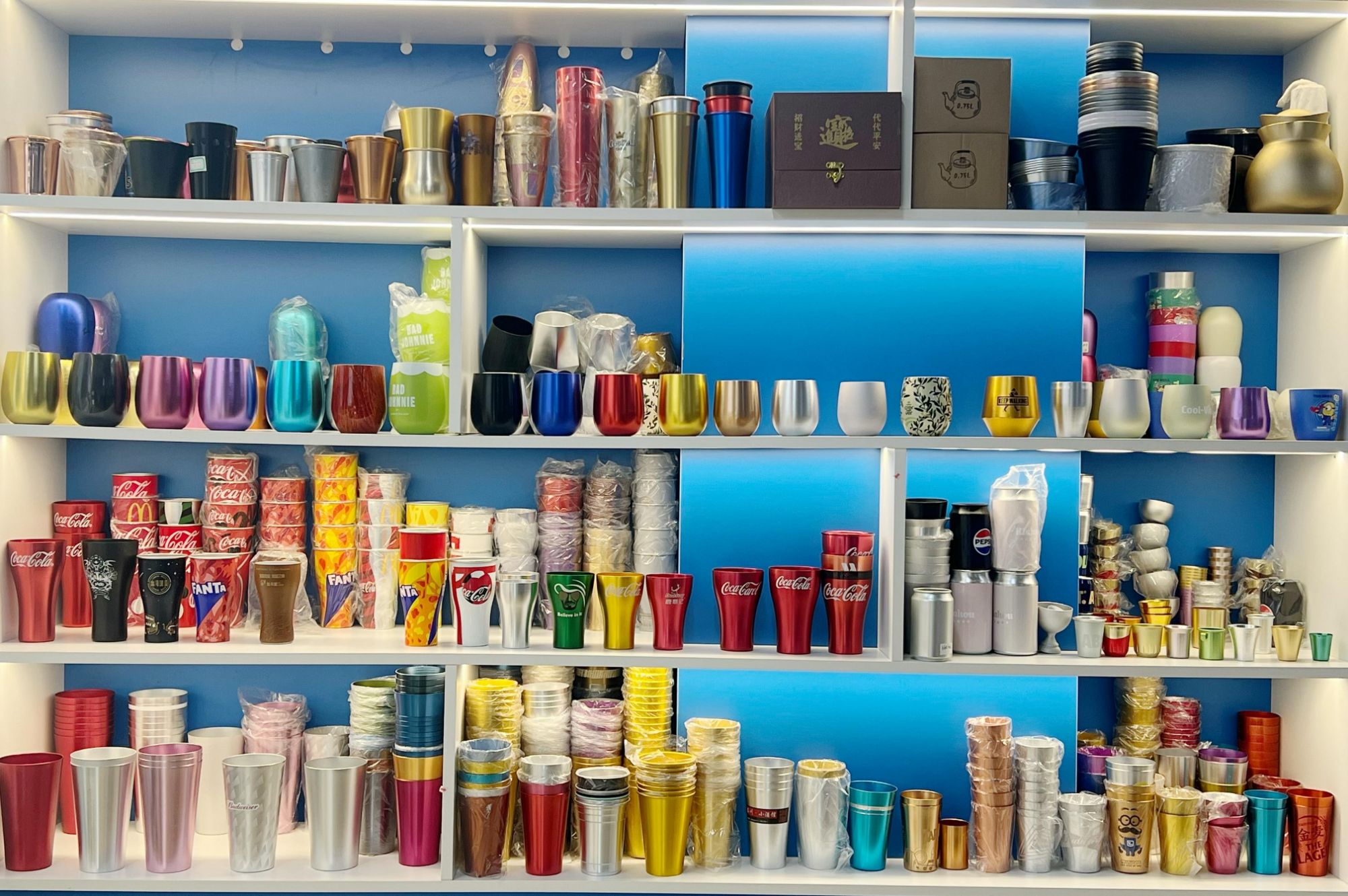
Most logos die an ugly death on the top rack. The secret isn't thicker ink or a pricier mug—it's where you put the mark. Keep the logo low on the side, below the widest curve, because that's the spot that gets the least direct water pressure and hardly ever rubs against other dishes. If you're printing on the bottom, kiss the design goodbye after a few cycles; the base sits in a puddle of hot, detergent-laced water and scrubs against the rack every time the machine vibrates.
For curved items like tumblers and bowls, place the logo on the flattest section you can find, ideally an inch or two above the foot ring. This keeps the artwork out of the high-heat zone near the heating element and away from the rim, where stacking chips and cracks the print first. A slightly off-center placement works better than a dead-center logo, because centered marks line up with the spray arm's strongest pulse and fade unevenly.
If you're stuck with a logo on a textured or matte surface, move it to the handle or the least tactile area—glaze textures wear down faster in the dishwasher, taking the print with them. And never put a logo where a spoon will rest against it. Spoons rotate in the basket and act like tiny sanders, slowly erasing even the best-cured ink. Test by running a blank item with a paper label taped to the proposed spot; if the label survives three cycles without tearing, your logo has a real shot.
How Glass Thickness Changes the Drinking Experience
The thickness of a glass does more than signal durability; it quietly steers how the drink first lands on your tongue. A thin, well-cut rim lets the liquid flow in a narrow, focused stream, so bright acidity and delicate fruit notes arrive before the palate has time to brace. By contrast, a thick, rounded rim spreads the sip across a broader surface and slows its entry, which can soften sharp edges and make the drink feel weightier or more mellow even when the recipe hasn't changed.
Beyond the rim, the mass of the bowl changes temperature behavior and touch. A heavier, thicker wall holds chill longer if the glass was pre-cooled, but it also sits more heavily in the hand and mutes the subtle warmth that can release aromas in spirits or full-bodied wines. Thinner walls respond faster to your palm, warming the liquid slightly and coaxing out volatile compounds; they also make swirling and tilting feel more precise, which shifts how much air mixes in with each sip.
Even the sound and balance contribute. A thick base gives a satisfying clink and a stable, grounded pour, while a thin, delicate glass feels almost invisible and keeps attention on the liquid itself. Drinkers often notice the difference only when switching back and forth, but that small change in thickness can move the whole experience from casual to ceremonial.
Why Your Beer Glass Shape Matters More Than You Think
A tulip glass isn’t just for show. Its inward curve traps volatile hop oils and esters right under your nose, so each sip arrives with a full aromatic hit. Pour the same IPA into a straight-walled shaker pint and those compounds scatter before you can register them.
Carbonation behaves differently depending on the vessel. A tall weizen glass with a narrow base and flared top lets CO2 rise through a longer column, sustaining a creamy, lasting head. Meanwhile, a curved bowl with etched nucleation points—like a Belgian goblet—encourages streams of tiny bubbles that carry yeast character upward instead of going flat on the tongue.
Even the way you hold the glass shifts temperature and pace. A stemmed pilsner flute keeps your palm off the bowl, preserving crispness for slower drinking, while a thick dimpled mug holds chill but warms quickly near the rim. These small details decide whether a beer tastes sharp and lively or dull and muted.
Negotiating Minimums Without Sacrificing Quality
When a supplier pushes back on lowering minimums, most buyers brace for a trade-off: smaller quantities often mean rushed production or cheaper materials. The trick is to shift the conversation away from volume and toward partnership. Ask about their actual cost drivers—setup time, raw material procurement, packaging runs—and look for places where you can absorb some of that without touching the product itself. Sometimes offering to accept a shared shipping container or adjusting your delivery schedule gives them enough breathing room to say yes to a lower quantity while keeping the same specs.
Another angle that works surprisingly well is to propose a staggered trial. Instead of demanding a permanent reduction, agree to a slightly higher first order that covers their setup costs, then lock in a lower minimum for repeat orders once the initial run proves its reliability. This gives both sides a way to test the relationship without betting the whole budget on an unproven product. And be specific about what quality means to you—not in vague terms, but with measurable details like tolerance ranges, finish standards, or defect rates. Suppliers are far more willing to negotiate when they know exactly what they are protecting.
It also helps to come prepared with alternatives that don't feel like ultimatums. If they won't budge on quantity, ask for quarterly reviews, a shorter lead time, or an option to split the order across multiple SKUs without paying a new setup fee each time. These small adjustments can offset the financial risk of holding extra inventory while keeping the door open for deeper discounts later. In the end, the goal isn't just to get a lower number on the purchase order—it's to build a supply agreement where quality metrics and minimums move together, not against each other.
Packaging That Protects Both Glass and Brand Image
When glass meets cardboard, the first casualty is often the customer's trust. A flimsy box that flexes under the weight of a bottle invites breakage, but over-engineered foam inserts feel wasteful and generic. The smart approach pairs a snug-fitting corrugated sleeve with a die-cut base that cradles the bottle's shoulders and base, using the glass's own curves as structural reinforcement. This way, the package absorbs shocks from drops and side impacts without resorting to bulky fillers.
Brand image gets tested the moment a box arrives with dented corners or torn tape. Using a matte, uncoated kraft exterior gives the unboxing a tactile, artisanal feel, while a single-color, debossed logo on the lid avoids printing that can flake or look cheap after transit. Inside, a thin layer of recycled tissue or a molded pulp tray not only prevents scuffs but also signals that the company thought past the warehouse. When the bottle slides out without a rattle or a scratch, the perceived value of the product climbs—before the customer even removes the cap.
Protection and perception are not separate goals. A box that survives a four-foot fall but crushes under a stack of twelve is a liability, so testing against real courier conditions matters more than lab specs. Similarly, a package that looks premium but forces a knife and three minutes of struggle leaves a bad final memory. The quiet win is a design that whispers 'we handle breakables every day' without shouting for attention—sturdy at the seams, easy to open, and visually understated enough to let the glass speak for itself.
FAQ
Look for a factory that already has standard mug molds close to your desired shape. Ask about their minimum order quantity per design and whether they charge extra for changing logo placement. Get a physical sample before committing, and check the handle joint and glass thickness for weak spots.
High-temperature ceramic glaze or laser engraving usually outperform cheap decals. Glaze becomes part of the glass surface and survives dishwashing far better. Laser engraving works well for a subtle, premium look, but it won't give you full-color logos.
Yes, but new molds can cost a lot and require larger production runs to make sense. If your budget is tight, choose an existing mold and focus on branding elements like the base, handle, or rim. A unique shape is worth it only if you plan to reorder regularly.
Skipping the pre-production sample is the biggest one. Also watch out for low-resolution artwork, logos placed too close to the drinking rim, and handles that crack if the glass anneals unevenly. If you need stackable mugs, confirm the base design allows stable stacking.
Request a dishwashing test report from the manufacturer, or ask for a sample and run it through a commercial dishwasher 50 to 100 times. Good glaze printing should show no fading or chipping. Avoid stickers or low-fired decals if the mugs will be used in bars or restaurants.
Most factories need 30 to 60 days for production after artwork approval. Pre-production samples can take two to four weeks, and shipping may add another month by sea. If your launch date is fixed, add at least two or three weeks of buffer for unexpected delays.
Factories usually offer lower pricing and direct communication with the production team. A good trading company can be helpful for small orders, mixed product sourcing, or when you need design and quality control support. Ask for a video of the production line or a third-party inspection before shipping either way.
Each mug should sit in a separated cardboard cell or foam pouch, with extra padding around the handle. Avoid overpacking boxes so mugs don't press against each other. For sea freight, use moisture-resistant cartons and clearly mark boxes as fragile glassware.
Conclusion
Choosing an OEM beer mug supplier isn’t just about price per unit. Before you commit, ask how they handle mold ownership, lead times, and whether they’ve produced similar custom glassware for breweries. The details that matter later often get decided in early conversations. For logo placement, skip delicate inks that fade after a few industrial dishwasher cycles—opt for etched or sandblasted marks, or at least high-temperature ceramic decals applied below the rim where they won’t scrape against racks. Glass thickness does more than add weight: a heavier base lowers the center of gravity, keeping mugs stable on crowded tables, while a thinner lip lets beer flow more smoothly and preserves head retention. And don’t assume one glass fits every style. A tall weizen glass traps banana and clove aromas, whereas a wide-mouth tulip pushes hop-forward IPAs toward the nose. The shape isn’t decoration; it’s part of the flavor delivery.
When minimum order quantities feel out of reach, negotiate smarter rather than simply asking for fewer pieces. Many manufacturers will lower the per-unit price if you accept their standard mold sizes or schedule your production during slower months. Quality doesn’t have to suffer: you can keep the same glass composition but reduce packaging layers or choose a shared freight route. Shipping matters just as much as the mug itself. Ask for dividers, foam inserts, and boxes printed with your logo instead of generic labels—damaged glass in transit undermines the premium feel you’re paying for. The best OEM partners treat packaging as an extension of your brand, not an afterthought. A little flexibility on timing or order volume can buy you both better pricing and a product that arrives ready to impress.
Contact Us
Contact Person: Milo
Email: [email protected]
Tel/WhatsApp: +86 18621923991
Website: https://www.dgbaide.com