
Louver Damper Valve Supplier Selection Tips for Long-Term Reliability
2026-09-24
Selecting a louver damper valve supplier isn’t just about specs on a datasheet—it’s about ensuring every actuation stays smooth and leak-free years down the line. With so many vendors claiming reliability, how do you separate substance from sales pitch? This guide breaks down the selection criteria that actually affect long-term performance, drawing on insights from THT's field experience.
Signs a Supplier Cuts Corners on Damper Blades and Seals
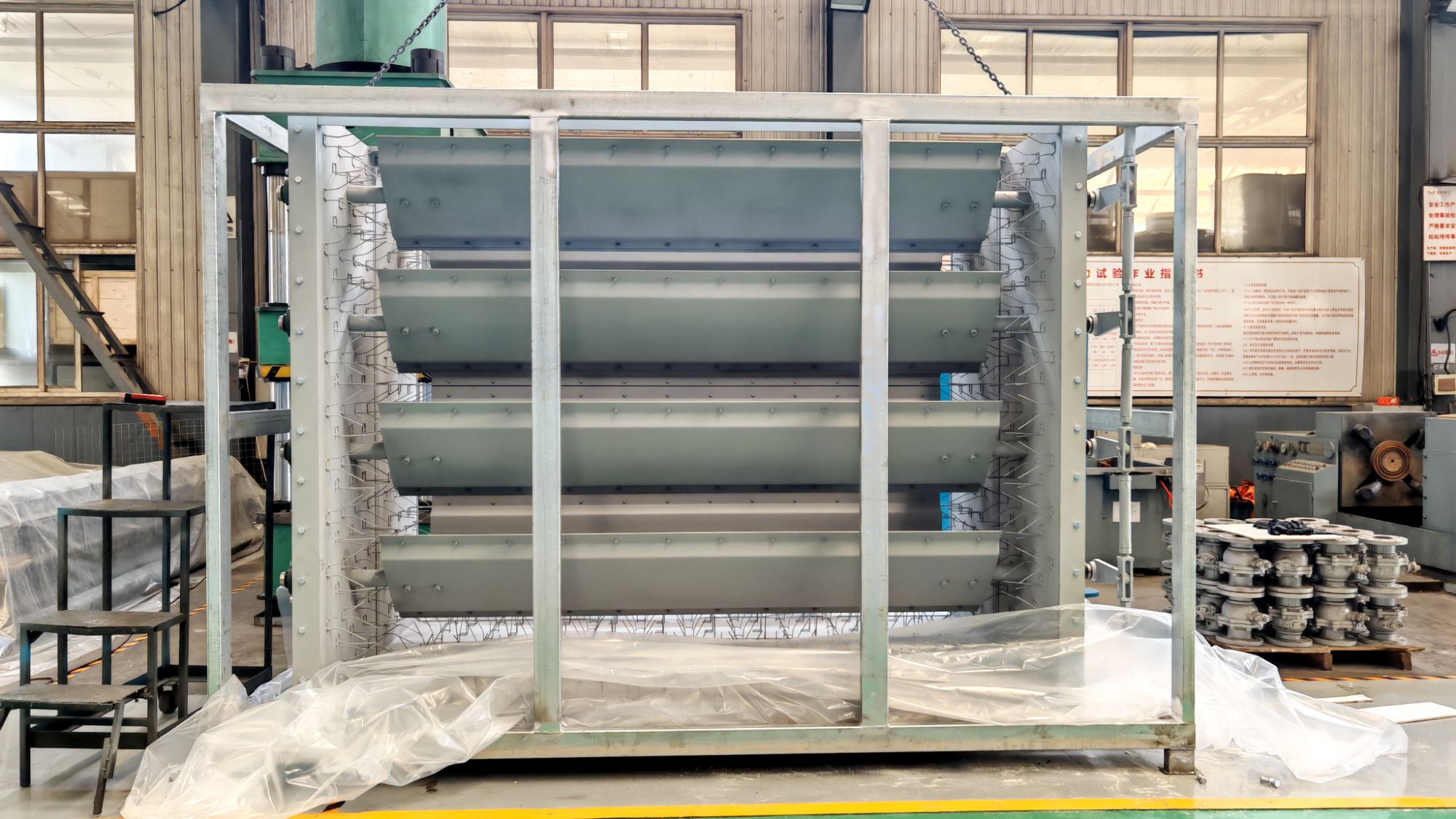
薄得能用手掰弯的镀锌钢板是最直接的信号。标准风阀叶片通常需要一定厚度来抵抗气流压力,但偷工减料的供应商会换成更薄的板材,甚至在跨度较大的叶片上省略加强筋。用手指按压叶片中心,如果出现明显弹性变形,这些叶片用不了多久就会在系统压力波动时发出异响或卡死。
密封件是另一个容易蒙混过关的地方。优质风阀通常使用连续成型的橡胶或硅胶密封条,边缘嵌入叶片或框架的凹槽中。如果看到密封材料是分段粘上去的,或者用的是低密度海绵泡沫,那基本可以断定供应商在压成本。这种密封在几次开关后就会脱落或失去回弹,漏风量会迅速超过设计值。
还可以留意叶片边缘的处理。负责任的制造商会做折边或卷边,避免锋利边缘划伤密封条。如果你发现叶片边缘只是简单剪切,甚至带着毛刺,密封条又直接贴在粗糙表面上,这套风阀的泄漏等级很难达到标称值。更隐蔽的做法是缩小密封条的截面尺寸,让它在关闭时勉强接触,但在正压或负压下根本压不紧。
Why Frame Rigidity Matters More Than Initial Cost
A frame that twists and flexes under everyday load doesn't just feel vague—it robs every input of its intended effect. Whether you're cornering hard, carrying a heavy payload, or riding over rough ground, that subtle give forces you to make constant corrections. The result is wasted energy and a machine that never feels fully planted, even if the price tag looked attractive at the register.
Over time, that lack of stiffness exacts a hidden toll. Flexing joints and mounting points work loose, drivetrain parts wear unevenly, and alignment drifts in ways that are hard to diagnose. You end up chasing noises, replacing bearings, and adjusting components far sooner than you should. A rigid frame keeps everything where it belongs, so the parts you bought once keep working the way they were designed to.
Upfront cost is easy to measure, but repeated repairs and lost performance are not. Spending a little more on a properly braced, well-welded frame usually pays for itself within the first year of hard use. The machine tracks straighter, responds more predictably, and holds up under abuse that would turn a flimsy frame into a money pit.
Actuator Compatibility Checks That Prevent Early Failures
Matching actuator torque to the valve's actual breakaway and seating torque is where most early failures begin. A unit that spins freely on the bench can bind after a few cycles if the safety margin drops below about 1.25. Compare torque curves at minimum and maximum supply pressure, not just rated voltage, and verify that the declared duty cycle covers the real start frequency. Overlooking these numbers leads to stripped gears, overheated motors, and field replacements within the first season.
Electrical compatibility goes beyond matching 24 VAC with 24 VDC. Check the actuator's inrush current against the control relay or PLC output rating, and confirm that the feedback signal type (4–20 mA, 0–10 V, or dry contact) aligns with your building management system input. Also compare field wiring length and gauge to the manufacturer's maximum cable run. A voltage drop that looks harmless on paper can cause hunting, incomplete stroke, or repeated fault calls, all of which shorten actuator life.
Mechanical fit is not something to assume from a similar bolt pattern. Measure stem height, ISO mounting pad, and coupling depth before installation. Even a small mismatch can force the actuator to sit proud or transmit side load, wearing seals and bearings quickly. When replacing an older unit, compare the new actuator's failure position and spring return direction with the process requirement. A power loss that drives the valve closed when you need it open may not look like a compatibility issue at first, but it becomes an early failure in practice.
The Role of Internal Linkage Design in Decade-Long Operation
When a system is meant to run for a decade, the internal structure of its hyperlinks stops being a mere navigational afterthought. It becomes a load-bearing element. Every cross-reference, every contextual bridge between distant sections, quietly determines whether the architecture can absorb years of content growth, taxonomy shifts, and user expectation changes without crumbling into orphaned pages.
A well-designed internal linkage fabric is not just about avoiding dead ends. It distributes authority in ways that keep older, foundational material discoverable even as newer layers pile on. The trick lies in resisting the urge to link only to the obvious or the recent. Instead, manual curation of paths that mirror how an operator actually thinks—by task, by failure mode, by upgrade history—creates a network that ages gracefully. This is not something an automated script can fake; it requires judgment about what genuinely belongs together.
Over a decade, the real payoff appears during migrations, audits, and onboarding. Teams can trace how concepts evolved because the links encode decision history. Users stumble into adjacent knowledge without ever feeling lost. The linkage design becomes a quiet form of institutional memory, one that does not need to be rewritten every time the homepage changes. It simply holds the whole operation together, page by page, year by year.
How to Verify Corrosion Resistance Claims with Real Test Data
Manufacturers love to toss around phrases like "marine-grade" or "superior corrosion protection," but those words mean little without hard numbers behind them. Before you trust a product's durability, ask for the specific test standard it was evaluated against—common ones include ASTM B117 for salt spray, ISO 9227 for neutral salt spray, or cyclic corrosion tests like ASTM G85. A legitimate claim should reference the exact standard, test duration, and performance criteria, such as "no red rust after 1,000 hours." If a supplier only offers vague assurances or "field-proven" anecdotes, treat that as a red flag, not a guarantee.
Once you have the test report in hand, dig into the details that matter for your environment. A salt spray test in a lab chamber doesn't automatically translate to decades of coastal service, so look for data that mimics real-world conditions—wet/dry cycles, UV exposure, temperature swings, or exposure to specific chemicals like chlorides or sulfur dioxide. Pay attention to the sample preparation too: was the coating applied at the same thickness and curing conditions as the production part? If the tested coupon was polished, pre-heated, or coated twice as thick, the results won't reflect what actually ships to your job site.
Finally, compare independent verification over self-reported numbers. Reputable manufacturers often have third-party lab reports from places like NACE-certified facilities or ISO 17025 accredited labs, and they'll share them without hesitation. Cross-check the failure mode as well—blisters, under-film corrosion, or edge creep can hide beneath a surface that looks fine. If the only evidence is a glossy brochure photo of a shiny bolt after "extensive testing," ask for the raw data, the test log, and the statistical spread. Real corrosion resistance isn't proven by a single surviving sample; it's demonstrated by consistent performance across multiple replicates and documented in a way you can verify independently.
Negotiating Spare Parts and Emergency Support Before You Sign
Locking down spare parts and emergency support isn't a side note you squeeze in before the handshake. It's where the real cost of ownership hides. Too many buyers walk away with a signed contract and a vague promise of "reasonable availability," only to find a three-week lead time for a critical component when the line is down. Push for a detailed spares list with guaranteed response windows—not just for standard wear items, but for the oddball parts that fail at the worst possible moment. Ask how the supplier handles a midnight breakdown: is there a dedicated emergency line, a local warehouse, or just a call center that opens Monday morning?
The trick is to treat support clauses as negotiable line items, not boilerplate. If the vendor won't commit to a four-hour response time in writing, ask why—and then ask what they will commit to. Sometimes the solution is a consignment stock agreement, where critical parts sit at your site and you pay only when they're used. Other times it's a fixed annual cost for a guaranteed uptime percentage, with penalties baked in. Don't accept "best effort" language; that's a legal way of saying "we'll try when it's convenient." Tie the emergency support terms to your own production schedule, not the supplier's standard service hours.
Finally, map out the escalation path before you need it. Get names, direct numbers, and a written commitment about who gets woken up at 2 a.m. when a drive motor seizes. A good supplier will welcome this conversation—it signals you're a serious long-term partner, not a one-off order. A bad one will stall or hand-wave. If you sense hesitation, walk away from the table or build a hefty penalty clause for every hour of unplanned downtime. The goal isn't to be adversarial; it's to make sure that six months after signing, you're not the one holding a broken machine and a phone that nobody answers.
FAQ
Watch for suppliers who avoid sharing third-party test results, use thinner gauge materials than industry norms, or cannot provide references from facilities with similar operating conditions. A lack of documented field service history is often a warning sign.
Material choice directly affects corrosion resistance, temperature tolerance, and structural integrity over time. Ask whether the supplier offers stainless steel, high-temperature alloys, or specialized coatings, and request material certificates to verify compliance with your process environment.
A dependable supplier should supply cycle life test data, leakage rate measurements, and pressure drop characteristics. Look for reports from independent labs or certifications like AMCA, which confirm performance under conditions that mimic real-world operation rather than ideal lab settings.
Check if they stock spare parts locally, offer maintenance training for your team, and commit to response times in writing. A supplier with a dedicated aftermarket department and extended warranty options typically invests more in long-term product reliability.
Poor edge sealing leads to internal leakage, vibration, and eventual blade binding. Reliable suppliers use mechanical metal-to-metal seals or flexible metal edge seals that maintain contact after thousands of cycles, reducing wear and preventing performance drift.
Standard designs often fail under unusual flow profiles, high temperatures, or frequent cycling. A supplier that can adjust blade shape, bearing type, and frame stiffness for your exact operating conditions will deliver a damper that avoids premature fatigue or jamming.
Look beyond the warranty period. Compare what is covered, whether labor is included, and if the warranty is pro-rated. A five-year structural warranty with full parts coverage for defects signals more confidence than a 12-month limited warranty that excludes seals and bearings.
Not necessarily, but proximity can shorten downtime if field service or replacement parts are needed. The key is supply chain resilience: a local supplier with limited testing capability may underperform a distant supplier with robust quality controls and fast global logistics.
Conclusion
Selecting a louver damper valve supplier with long-term reliability in mind requires looking past polished brochures and focusing on the physical details that fail first. Ask how the blades and seals are actually fabricated—cheap suppliers often use thinner gauge metal, incomplete edge welds, or generic elastomers that warp and leak within a few thermal cycles. Frame rigidity is another give-away: a flexing frame under normal duct pressure will transfer stress to the blade bearings and cause premature binding, so a heavier, well-braced frame usually pays for itself even if the upfront price is higher. Before you commit, confirm that the actuator you plan to use matches the torque curve and stroke requirements at the damper's maximum pressure drop; mismatched actuators are a common source of early motor burnout and position feedback errors.
Internal linkage design is rarely discussed but often determines whether the damper still opens smoothly after ten years of cycling, so inspect the linkage geometry and bushing materials rather than assuming all designs are equal. When a supplier claims corrosion resistance, don't settle for a generic coating name—request actual salt spray test results, coating thickness measurements, or field service references from similar process conditions. Finally, lock in spare parts availability and emergency response before signing: ask for guaranteed inventory of blade seals, bearings, and linkage pins, and clarify whether the supplier offers same-day or next-day technical support. These practical checks will filter out vendors who look good on paper but cannot deliver reliable operation over the long haul.
Contact Us
Contact Person: Su Zhang
Email: [email protected]
Tel/WhatsApp: +86-25219206
Website: https://www.tht-valve.com/