

Liquid Soil Binder for Stronger, More Stable Ground
2026-09-22
What if the ground beneath your feet could be transformed from loose and unreliable into rock-solid stability with a single application? That's exactly what a high-performance MST liquid soil binder delivers. Whether you're tackling erosion, dust control, or foundation prep, this advanced solution penetrates deep below the surface, binding particles together to create stronger, more stable ground that stands up to traffic, weather, and time. In this post, we'll explore how it works, where it shines, and why more engineers and contractors are making the switch from traditional mechanical methods to this smarter, longer-lasting alternative.
What Loose Ground Needs Before You Roll
Before you roll over loose ground, the surface has to be properly prepared. It needs to be cleared of large rocks, roots, and debris that could cause uneven compaction or damage the roller. The soil itself should be brought to a moisture level that allows particles to bind together without becoming overly sticky or muddy. If the ground is too dry, the loose material will simply scatter and never settle; if it is too wet, it will cling to the drum and create deep ruts.
In most cases, the loose ground also needs a final grading pass to establish the correct slope and elevation. This ensures that the roller is not trying to fix major undulations on its own, which would lead to uneven density and weak spots. A smooth, consistent layer of loose material, spread at the right thickness for the roller’s weight and drum type, is far more effective than forcing a heavy machine across raw, unshaped terrain.
Some ground conditions call for a stabilization fabric or a thin base of crushed stone before the main fill is placed. This prevents the loose particles from being pushed downward into soft subsoil, which would waste compaction effort. It also helps distribute the load of the roller more evenly, so the top layer reaches the target density without excessive passes that could fracture the aggregate or over-compact the fines.
How a Liquid Soil Binder Locks Dirt Down
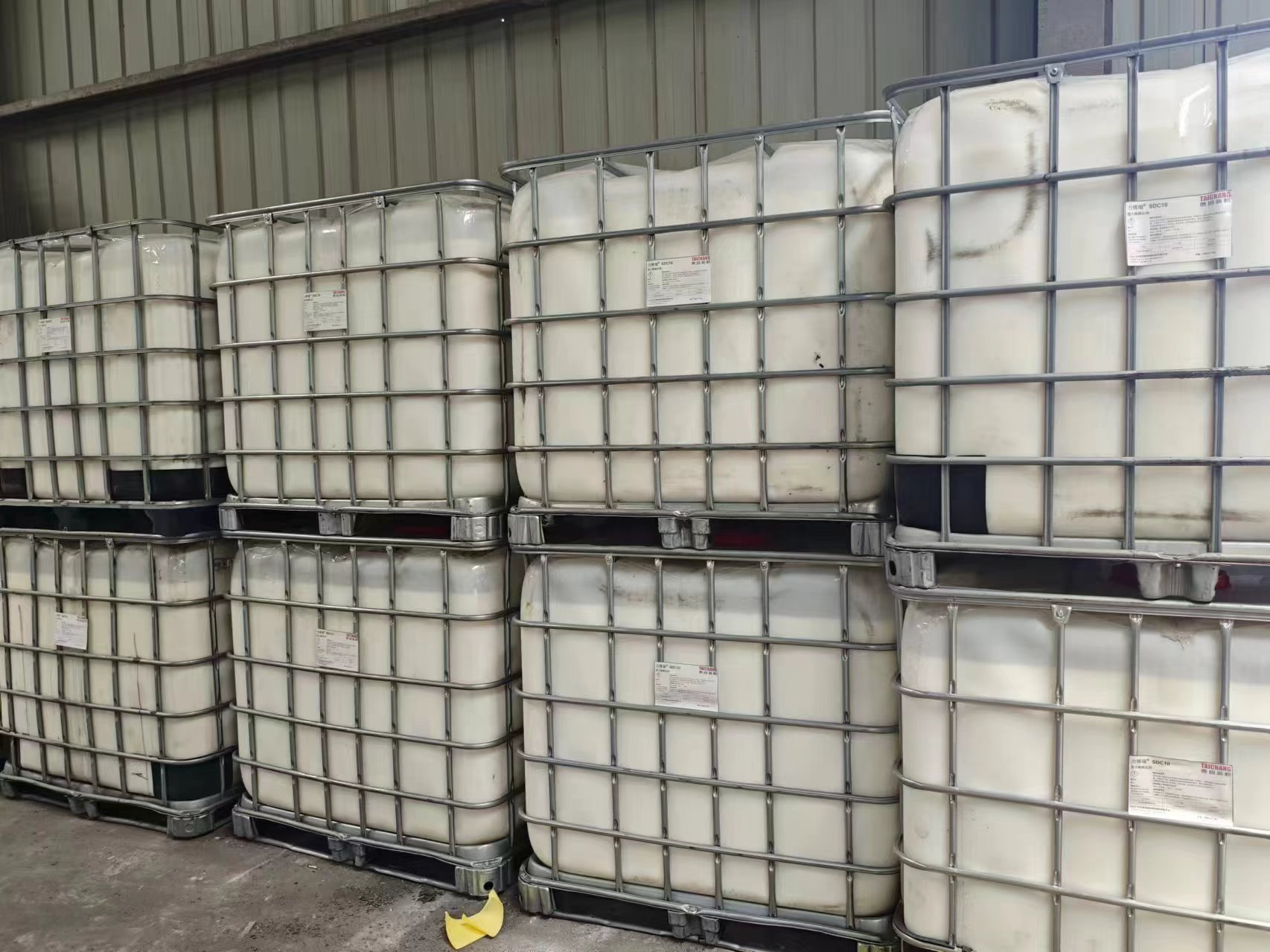
The binder doesn't just sit on top of the ground; it seeps into the upper layer and spreads through the spaces between sand, silt, and clay particles. As the liquid contacts the soil, polymer chains begin to wrap around individual grains. While the water evaporates, those chains shorten and cross-link, pulling loose particles into a continuous, interconnected web. The result is a surface where grains no longer move independently, so passing tires or strong gusts can't peel them away one by one.
What forms is a thin but resilient crust that behaves more like a flexible skin than a brittle shell. It still lets air and a small amount of moisture pass through, but it stops fine dust from lifting into the air. On haul roads, construction sites, or open storage yards, this approach lasts far longer than water spraying because it changes the mechanical relationship between particles. Once the binder has cured, the soil doesn't return to its dusty state as soon as the surface dries.
Bond strength continues to build over the first week or two as residual reactive groups interact with minerals in the ground. If a small section gets scraped or cracked, the damage rarely spreads, because the surrounding polymer network re-engages the loosened grains along the edge. In practical terms, the binder doesn't simply glue dust to the surface; it turns the top layer into a cohesive, elastic body that holds itself together under everyday stress.
Why Some Binders Turn to Mud in Rain
The breakdown usually starts long before the first raindrop lands. Many budget binders use starch- or dextrin-based adhesives that never fully cross-link into a water-resistant film. Their long carbohydrate chains stay hungry for moisture, and a steady shower gives them exactly what they crave. The binder swells, softens, and loses its grip on paper fibers, slumping into a paste that looks more like river silt than bookbinding glue.
Animal glues have an even faster collapse. Made from collagen rendered from hides and bones, they hold beautifully in dry conditions but rehydrate with alarming speed. Warm rain accelerates the process, breaking the protein bonds and returning the glue to its original gelatinous state. Acidic urban runoff only worsens the damage, etching away the binder's remaining structure until the cover slides off in a brown smear.
Synthetic PVA blends aren't automatically safe, either. Manufacturers sometimes add plasticizers or cheap fillers to keep costs down, which creates microscopic weak points as the adhesive ages. Rain sneaks into those tiny fissures, emulsifies the softened polymer, and leaches out its cohesive strength. What's left behind isn't a simple failure—it's a muddy, gritty residue that clings to everything and refuses to let go.
Slope Stabilization Without Heavy Machinery
Working on steep or unstable slopes often brings to mind excavators, drill rigs, and dump trucks. But there are many situations where bringing in heavy equipment is impractical, too costly, or simply impossible due to access, environmental sensitivity, or budget limits. In these cases, slope stabilization can still be achieved using low-impact methods that rely on manual labor, lightweight tools, and natural materials. The key is to understand the failure mechanism first—whether it's surface erosion, shallow slumping, or creep—and then match the intervention to the scale and cause of movement.
One effective approach is to use live staking and brush layering with deep-rooted native plants. Willow, dogwood, and poplar cuttings can be driven directly into the soil during dormancy; once they root, they act like thousands of tiny soil nails, binding the top layer together while also drawing out excess moisture. For slightly deeper instability, hand-dug trenches filled with compacted gravel and wrapped in geotextile fabric create lightweight drainage ribs that relieve pore water pressure without the need for machinery. Another option is to install small-diameter soil nails or earth screws using a handheld rotary hammer—these can reinforce a slope face quickly and are especially useful for retaining walls or road cuts where space is limited.
The real advantage of going machine-free is control. Workers can move slowly, adjust placement on the spot, and avoid over-excavating or damaging tree roots that larger equipment would tear through. It also opens up possibilities for community-led projects or work in remote areas where fuel and spare parts are hard to come by. Of course, hand methods take longer and require careful sequencing—often working from the toe upward and covering bare soil immediately with erosion control blankets or mulch. But for many slopes under 10 meters in height, with moderate soil conditions, a well-planned manual stabilization effort can be just as durable as a mechanized one, with far less disturbance and often a fraction of the cost.
One Binder for Driveways, Trails, and Dusty Lots
When gravel keeps scattering or dust rises with every step, a single stabilizing product can change how the whole surface behaves. This type of binder mixes directly into the loose material and locks particles together without turning the ground into a hard, unnatural slab. The result still looks like packed stone or soil, but it stays put under tires, hooves, and foot traffic.
Homeowners and property managers often use it on long driveways, winding walking paths, or open parking areas where regrading gets expensive. Instead of hauling in new material every season, they treat the existing ground once and then watch potholes and washboards fade. Rain runs off more evenly, and dry spells no longer send clouds of fine dust across the yard or into the barn.
For spots that need to keep a natural appearance, this approach works better than asphalt or concrete. It flexes with the earth, fills in small ruts on its own after light grading, and requires no heavy machinery for routine upkeep. Many users appreciate that the same bag or drum can handle a gravel lane, a horse trail, and a dusty equipment lot without switching products.
After the First Downpour, Does It Hold?
The first real test came on a Tuesday, when the sky opened up without warning. I was halfway across the bridge, bike lane slick with rain, and the jacket had only been worn twice before. Expectations were low—most 'waterproof' gear starts to seep at the shoulders after twenty minutes. This time, though, the drops kept beading and rolling off instead of soaking in.
Back indoors, I hung it over the shower rod and checked the usual trouble spots. The zipper flap was dry underneath, the cuffs hadn't wicked moisture up the sleeves, and the hood brim still held its shape rather than collapsing into a soggy mess. There was one faint damp patch near the lower back, but that was from my backpack strap pressing through, not a failure of the membrane itself.
A single downpour isn't a verdict, but it's a decent first signal. The real question is whether that beading survives a few washes and a month of daily use. For now, after one heavy storm, the answer is a cautious yes.
FAQ
Compaction alone leaves particles physically squeezed together, but they can still separate under traffic or rain. A liquid binder creates chemical bonds between particles, forming a hardened crust that keeps the ground locked in place even when it gets wet or stressed.
It works best on granular materials like sand, gravel, and crushed rock, because the binder can easily coat each particle. Highly expansive clays are trickier, but some formulations are designed to reduce clay swelling by encapsulating the fines.
Most applications use a standard water truck or sprayer to distribute the binder, followed by grading and compaction. You don't need a dedicated mixing plant. For small areas, a backpack sprayer can handle the job if you rake it in quickly.
That depends on traffic loads and weather exposure. Light foot traffic or occasional vehicle use might get two to three years from one application. Heavy haul roads or areas with harsh freeze-thaw cycles may need a maintenance topcoat every six to twelve months.
Most modern binders are non-toxic and water-based once cured, so they're generally safe for vegetation and wildlife. Avoid applying directly into ponds or streams, and keep livestock off the area until it's fully dry to prevent tracking.
Dust control is a direct result of the particle bonding. Loose fines get locked into the surface crust, so wind and vehicle turbulence can't lift them. It's often the primary reason mine haul roads and construction sites use these products.
Yes, the binder increases cohesion, which helps soil resist sloughing on slopes. For steep grades, you may need to combine it with erosion control blankets or hydroseeding until vegetation establishes, but the binder itself greatly reduces surface washout.
Conclusion
Loose, shifting soil rarely cooperates with rollers or repeated passes unless the ground has already been given something to bind the particles together. Before compaction, the surface needs a treatment that reaches below the top dust and fills the gaps between sand, silt, and clay. A liquid soil binder does exactly that, soaking into the ground and curing into a firm matrix that holds dirt in place. Unlike water or basic dust suppressants, a well-formulated binder penetrates deeply and creates a durable bond that resists the softening effects of moisture. Many binders on the market turn to mud after a heavy rain because they rely on temporary surface tension or water-soluble polymers that wash away. The right product, however, locks the soil down in a way that stays intact even when the skies open up.
This approach works just as well on steep slopes as it does on flat driveways, trails, or dusty lots. You don't need heavy machinery or expensive earthworks—just a sprayer and time for the binder to set. A single product can stabilize a gravel driveway, harden a walking path, and keep a parking area from turning into a dust bowl. The real test comes after the first downpour. If the binder has penetrated and cured properly, the surface stays firm, ruts don't form, and the ground remains stable instead of washing away. That kind of performance is what separates a genuine soil binder from a short-lived coating.
Contact Us
Contact Person: Helen
Email: [email protected]
Tel/WhatsApp: 86 18630661160
Website: https://www.roadmilestone.com/