

In Line Shuttle Machine Company Transforms Assembly Lines with Innovative Automation
2026-10-15
Most assembly lines still move like they did twenty years ago—fixed paths, fixed timing, fixed thinking. In Line Shuttle Machine Company is breaking that mold with automation designed around real production variability, not idealized flowcharts. The result is a line that adapts on the fly, and it’s exactly the kind of shift Rising Sun is watching closely. Here’s what that means for manufacturers tired of one-size-fits-all systems.
When Conveyor Logic Met Real-Time Adaptability
Conveyor systems used to run on hardwired relays and ladder logic that treated every box the same way. Then operations started demanding more from the same line—smaller batches, mixed SKUs, tighter changeover windows. The old logic couldn't see what was coming; it could only react after a sensor tripped. Real-time adaptability changed that. Now the same conveyor can read a barcode upstream, slow a section for fragile items, or reroute a carton to a different spur without stopping the flow. It's less about moving things and more about making decisions while they move.
The shift didn't happen by ripping out every PLC. It came from layering edge devices and lightweight communication protocols onto existing controls. A drive that can report torque in milliseconds, a camera that flags a skewed package, a gateway that shares that data with the merge logic: these small additions turn a dumb line into a system that adjusts mid-cycle. The real difference is that logic no longer lives only in a central program. It's distributed across points where conditions actually change.
This blending of conveyor logic with real-time adaptability shows up most clearly during exceptions. A jam at a transfer, a sudden demand spike, a label that won't scan—traditional lines stop and wait for a human. Adaptive lines already have a Plan B: divert to a recirculation loop, hold a zone for two extra seconds, or notify maintenance with the exact location. The conveyor still does what it was built to do. It just no longer needs someone to tell it how every time the situation shifts.
Why Legacy Lines Needed a Rethink, Not a Patch
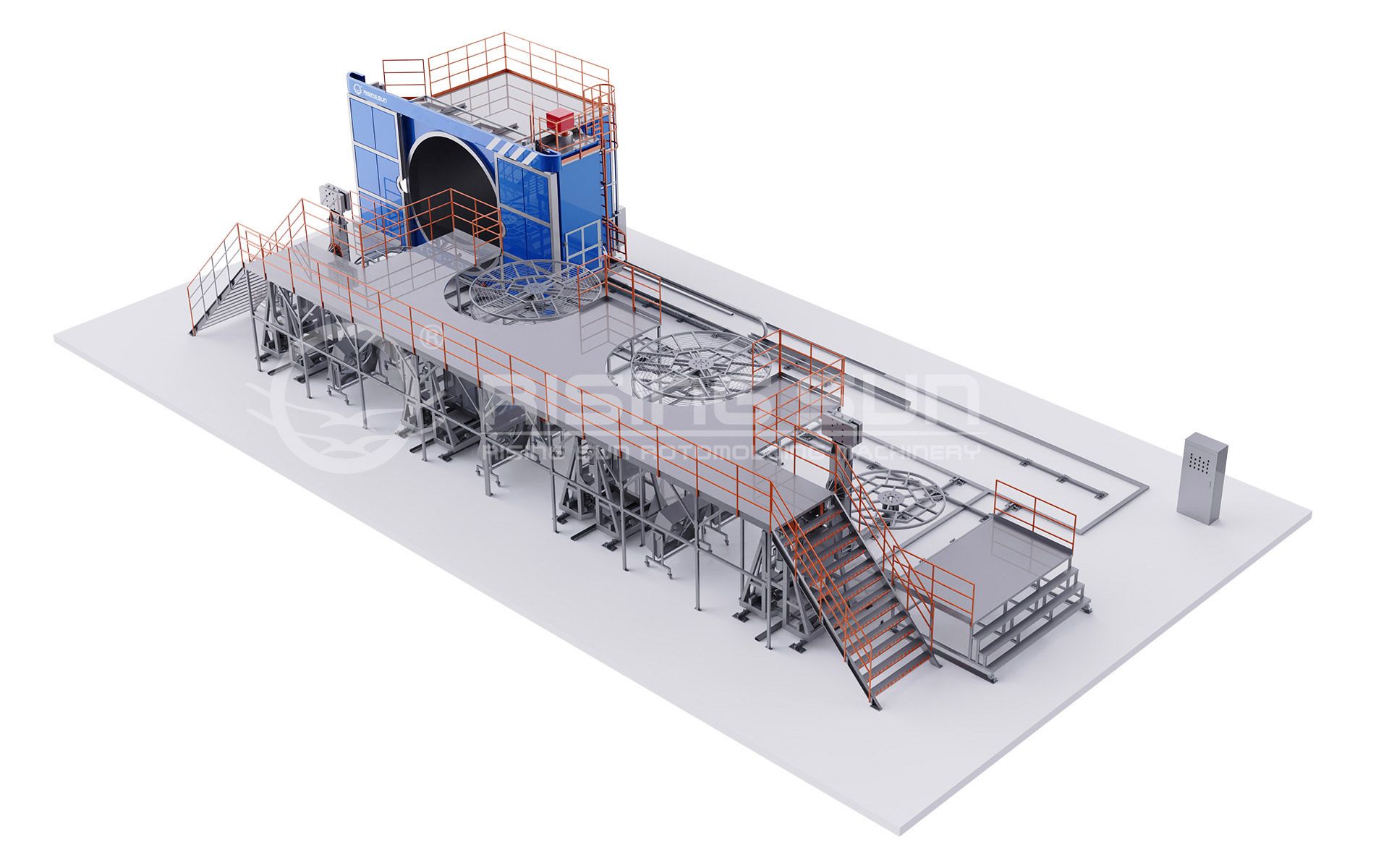
Legacy lines tend to collect fixes the way old houses gather improvised wiring—each one made sense in isolation, but together they create a maze no one fully trusts. A patch might silence the immediate alarm, yet the underlying assumptions about data flow, uptime expectations, and user behavior have shifted so far that the original design now works against the team. Rethinking means accepting that some early decisions were correct for a different era and no longer serve the current scale or pace.
The real cost often hides in the slowdowns that never become tickets: engineers double-checking brittle integration points, new features bending around constraints nobody remembers creating, and onboarding that depends on oral history. Addressing those issues takes a different kind of work than patching a bug—it requires redrawing boundaries, questioning inherited abstractions, and sometimes deleting code that still runs but no longer earns its place. That is uncomfortable, but far more durable than adding another layer of tape to a system already leaning hard on old habits.
Inside the Shuttle's Split-Second Decision Cycle
During the first two minutes after liftoff, the shuttle's four general-purpose computers ran the same guidance, navigation, and control code in lockstep, comparing outputs every 20 milliseconds. Any disagreement triggered a vote-out of the faulty unit, while the remaining machines continued the decision cycle. This wasn't a one-time check; it was a rolling loop that re-evaluated engine thrust, chamber pressure, and trajectory against the preloaded abort boundaries with every fresh batch of telemetry.
The cycle itself compressed a sequence that ground teams once took minutes to work through into a fraction of a second. Each pass read the inertial measurement units, filtered sensor noise, checked whether any redline had been crossed, and then either accepted the current state or branched into a precomputed action—throttle down, engine shutdown, separation, or a return-to-launch-site abort. Because the shuttle had no capability to loiter or try again, the decision tree had to be fully enumerated before the solid rocket boosters even ignited.
What made the loop survivable was the human layer wrapped around it. The flight control room in Houston saw the same data on a slight delay and could override certain automated sequences, but only within narrow windows. Controllers trained for years on the exact same decision branches, so when the computers called an abort, the room acted as one body—no debate, no second-guessing—just the next callout in a rhythm that had already been rehearsed thousands of times in simulations.
The Quiet Death of Fixed Workstations
Walk through any office built before 2010 and you can still spot the fossils: bulky monitors bolted to laminated desks, tangled cable snakes, a nameplate screwed into the wall. These setups assumed one person, one task, one place, eight hours a day. That assumption has been crumbling for years, not with a bang, but with the soft hum of laptops being unplugged.
The shift isn't about technology alone. It's about expectations. Employees now drift between meeting rooms, home offices, and client sites without thinking twice. A machine that only works at a particular desk feels less like a tool and more like an anchor. Managers have noticed too—when people aren't tied to a single spot, they collaborate differently, often more fluidly, and the office itself becomes a landscape of choices rather than rows of assigned seats.
What's dying is not the desk itself, but the idea that work has a fixed address. Companies are quietly retiring the old model: hot-desking apps, cloud logins, and portable docks have replaced drawer keys and monitor cables. The fixed workstation didn't fail dramatically. It simply stopped being necessary, and one day we looked around and realized nobody missed it.
How Modular Fixtures Cut Changeover From Hours to Minutes
Conventional changeovers eat time because every fixture is a custom-built island. Operators loosen stacks of bolts, tap parts into alignment with a dial indicator, and then run test pieces to catch positioning drift. Replacing that with a modular system strips the process down to a handful of standard interfaces: a quick-release base plate, locating pins that only fit one way, and clamping modules that snap into pre-drilled holes. The old ritual of measure-adjust-measure disappears because the geometry is already locked into the fixture components themselves.
What really accelerates the switch is not just faster clamping, but the elimination of setup verification. With dedicated fixtures, even a skilled operator might spend forty minutes nudging a stop block and another twenty proving the first part. Modular units are pre-qualified off-line: you can set tooling for the next job on a spare base while the machine is still running the current one. A cart rolls over, two pins drop in, hydraulic lines connect, and the machine is ready to cut. Five minutes from last good part to first good part is not unusual.
The savings compound in shops that run three or four jobs a day. Instead of losing an entire shift per week to changeover, the same spindle time becomes productive. That also changes the economics of small batches—what used to be a two-hour penalty for a fifty-piece order now feels like a pause, not a project. Modular fixturing doesn't just cut minutes; it removes the mental overhead that made frequent changeovers a production risk.
Operators Became Orchestrators, Not Watchers
The shift from passive monitoring to active orchestration redefined the operator's role on the plant floor. Instead of staring at dashboards waiting for alarms, operators now sequence automated workflows, juggle multiple semi-autonomous systems, and make real-time trade-offs between throughput, quality, and energy use. The console became a conductor's podium rather than a surveillance booth.
A seasoned operator no longer reacts to every deviation; they tune the parameters that let the system self-correct, stepping in only when the orchestration logic hits a genuine edge case. This demands a deeper mental model of the process—not just knowing what each sensor reads, but understanding how interventions cascade through upstream and downstream units. The best operators now think in terms of system states and transition triggers, not alarm lists.
Training has followed suit, shifting from procedural memorization to scenario-based decision games. New hires learn to read orchestration maps, delegate routine tasks to automation, and reserve their attention for bottleneck prediction and exception handling. The operator's value is no longer measured in hours of vigilance, but in the quality of interventions that keep the entire line flowing smoothly.
FAQ
They've moved away from fixed conveyor layouts and introduced shuttle systems that let workpieces travel independently between stations. Each shuttle can speed up, slow down, or pause without stopping the whole line.
Traditional lines often lock every station to a single cycle time. If one station hiccups, everything downstream waits. The shuttle model decouples stations, so a slow operation doesn't cascade.
Lines with mixed models or frequent changeovers get the biggest gains. The shuttles can reroute on the fly, so you don't need to rebuild tooling every time a new variant comes through.
In one automotive subassembly project, they cut changeover time from 22 minutes to under four, and throughput rose about 18 percent without adding floor space.
They offer modular shuttle segments, so a shop can start with two or three stations and expand later. That keeps the initial investment lower than a full custom line.
Each shuttle has its own drive and sensors, but diagnostics are centralized. Faulty units can be pulled off the line and swapped in minutes, which avoids shutting down entire cells.
Operators shift from manual material handling to overseeing shuttle traffic and line balancing. The company also runs training programs so existing employees can transition.
Conclusion
The In Line Shuttle Machine Company has fundamentally reimagined what an assembly line can be by replacing rigid, fixed-position workflows with a shuttle system that thinks on its own. Instead of bolting on more sensors or adding another layer of software to an aging line, the company started from the operator's reality: legacy conveyors were never designed to adapt in real time. The new shuttle architecture embeds split-second decision logic directly into each carrier, allowing the line to re-route, re-sequence, and re-balance work without stopping. This quiet death of fixed workstations means no more waiting for a fixture to become free or walking half a kilometer for a torque gun. Modular fixtures snap into the shuttle, so a model changeover that used to eat up an entire shift now happens in the time it takes to grab a coffee. Operators no longer babysit machines; they orchestrate flow from a tablet, stepping in only when the system flags a genuine anomaly rather than a predictable hiccup.
What makes the In Line approach distinctive is that it treats adaptability as a mechanical property, not just a software overlay. Each shuttle is a small, self-contained decision node that negotiates with neighboring shuttles and tool stations on the fly. The result is a line that breathes: it speeds up where demand is hot, slows down where quality checks need a second look, and side-steps a bottleneck before it becomes a pileup. Workers describe the shift as going from watching a metronome to conducting an ensemble. Rather than standing at a station waiting for the next unit, they now move with the work, assisted by fixtures that lock and release in seconds. This fusion of modular hardware, embedded autonomy, and a redefined operator role is why the company's assembly lines are no longer just faster—they are fundamentally more human.
Contact Us
Contact Person: Sharon Zhu
Email: [email protected]
Tel/WhatsApp: 8615712666272
Website: https://www.risingsunroto.com