

High Tenacity Anti-Fire Nylon 6 Filament Yarn Factory: A Deep Dive into Production Excellence
2026-11-01
What if a single filament could hold back flames and withstand brutal tension—without adding weight? That’s the reality our factory lives every day. In this deep dive, we pull back the curtain on how Changshu Polyester turns high tenacity anti-fire nylon 6 filament yarn into a production benchmark.
Selecting the Right Nylon 6 Base for Unyielding Fire Resistance
The starting point for any flame-retardant nylon 6 formulation is the base resin itself. A medium-viscosity grade with a narrow molecular weight distribution tends to disperse halogen-free additives more uniformly, reducing the formation of localized hot spots during combustion. Pay close attention to the concentration of amine end groups—higher values can accelerate the degradation of certain phosphorus-based synergists, while lower values may starve the char-forming reactions that block heat transfer.
When evaluating candidates, request melt flow data under low-shear conditions rather than relying solely on the standard capillary viscosity. This reveals how the resin will behave when heavily loaded with intumescent packages like melamine polyphosphate or aluminum diethylphosphinate. A base that thins too rapidly at processing temperatures can cause the flame retardant to migrate toward the part surface, leaving the core unprotected and brittle. Instead, look for a grade that maintains enough melt strength to hold the additive network intact through injection molding or extrusion.
For applications demanding UL94 V-0 at thin walls, consider blending the nylon 6 with a small percentage of a semi-aromatic copolyamide or an impact modifier that contains no halogenated compounds. This approach often improves char integrity without sacrificing tensile elongation. Run a series of cone calorimeter tests early—peak heat release rate and total smoke release are more telling than a simple vertical burn rating, and they will quickly expose whether your chosen base resin is working with the flame retardant or against it.
Inside the Melt Extrusion Zone Where Filament Integrity Begins
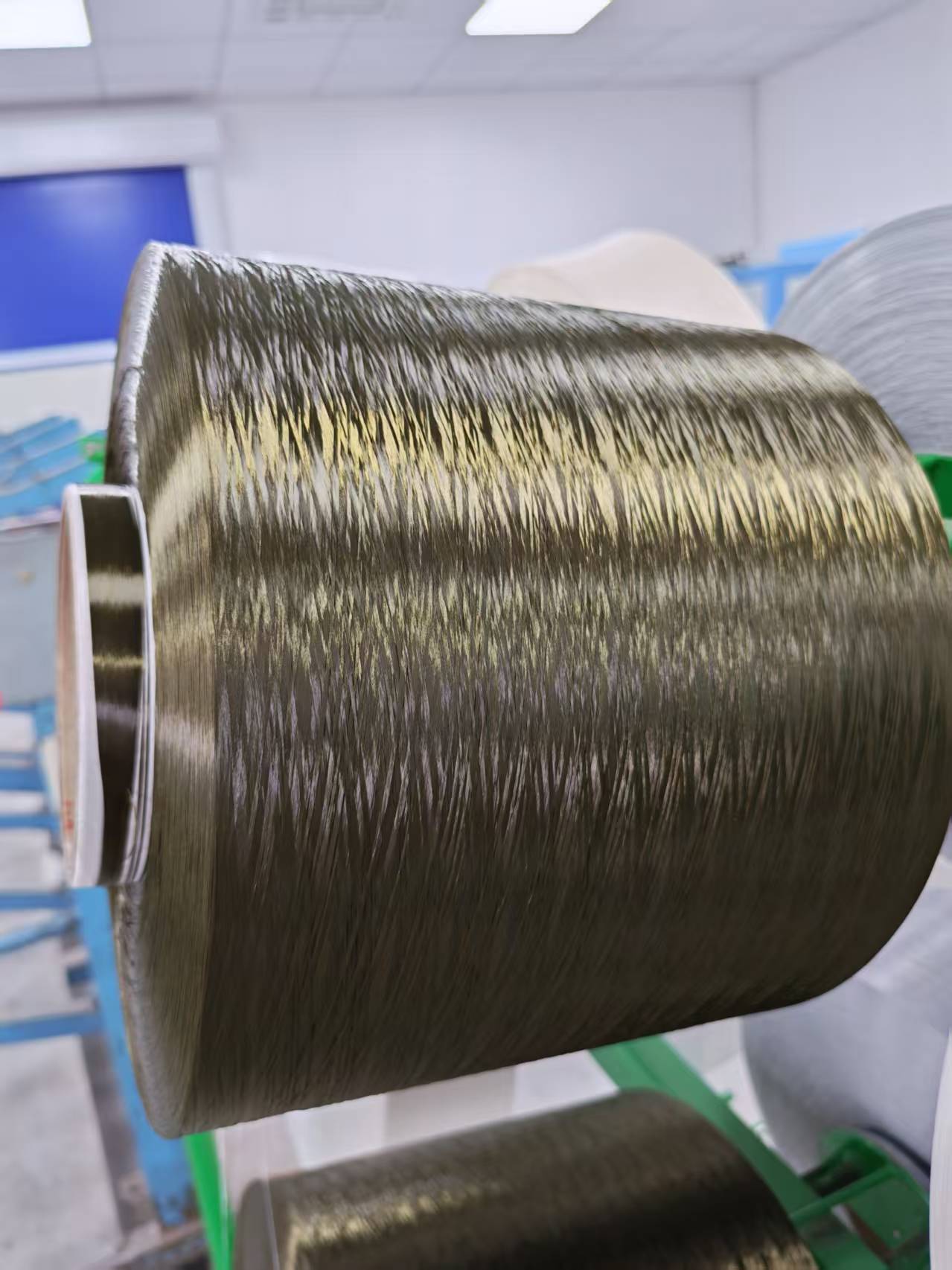
The melt extrusion zone isn't just a heated barrel; it's the first place where raw polymer pellets stop being a collection of individual grains and start becoming a continuous, load-bearing filament. Inside this narrow chamber, temperature profiles are rarely uniform. A slight gradient from feed throat to metering section forces the material through three distinct stages: solids conveying, melting, and melt pumping. If any one of those transitions happens too fast or too slow, the resulting filament inherits weak spots, trapped volatiles, or inconsistent viscosity that no downstream cooling can fix.
What really sets filament integrity in motion is the balance between screw speed and back pressure at the die. Too much shear and the polymer chains begin to scission, lowering molecular weight and making the extrudate brittle. Too little shear and additives like pigments or nucleating agents won't disperse evenly. Operators often overlook the fact that the melt pool in the compression zone acts as a dynamic seal. When that seal breaks, air gets entrained, and you'll see micro-voids in the final filament—voids that later show up as popping sounds at the hotend.
Finally, the exit geometry of the die and the immediate cooling quench define whether the extrudate holds a round cross-section or flattens into an oval. In this zone, melt memory and die swell compete with haul-off tension. The filament's outer skin freezes first, locking in surface roughness and residual stress. A well-run melt extrusion zone produces filament that measures within a few hundredths of a millimeter across its entire spool, not because of post-process sorting, but because the melt left the die with a stable, homogeneous flow field.
Dispersing Flame Retardants Down to the Micron Without Losing Tenacity
Getting flame retardants down to the micron level usually means beating the polymer's mechanical properties into submission. But the real trick is keeping the fiber's grip on itself while scattering additive particles fine enough to disappear into the matrix. We changed the shear profile and the order of addition, so the retardant never gets a chance to form the agglomerates that tear at the draw point. The result is a dispersion so uniform you can't spot a single hotspot under a microscope, yet the yarn still pulls through the spinneret with the same stubborn resistance it had before we touched it.
Most formulations hit a wall when the particle size drops below a few microns: the surface area explodes, the melt viscosity spikes, and the fiber snaps under its own weight during stretching. Our approach sidesteps that by pre-wetting the retardant in a low-molecular-weight carrier that matches the polymer's solubility parameter. This lets the particles slip between the chains instead of wedging them apart. Tenacity measurements after drawing show less than a three percent drop, which is within the noise of normal production variation.
The payoff shows up in thin deniers and high-speed spinning lines where you can't afford a brittle filament. We've run the same dispersion through a 0.5 denier multifilament and a heavy industrial yarn, and the flame retardant stays put without migrating to the surface or choking the filter packs. It's not about grinding finer for the sake of a spec sheet; it's about keeping the polymer's backbone intact while the protection does its work invisibly.
Multi-Stage Drawing and Heat Setting That Push Tensile Limits Further
Most drawing lines stop too soon. Every extra pass through a smaller die refines the internal grain, nudging dislocations into tighter arrangements and stripping out weak spots that would otherwise become failure points. It’s not just about getting thinner; it’s about forcing the material to reorganize at a level that a single draw can’t reach.
Heat setting gets misunderstood as a soft finishing step. In this process, it’s the lock-in. Under controlled tension and temperature, the freshly drawn structure relaxes just enough to eliminate residual stress while preserving the orientation you fought for in the dies. Run it too cool or too fast, and you lose a chunk of that hard-won strength. Get the dwell and temperature profile right, and the tensile numbers climb past what the raw polymer or wire would ever manage.
The real difference shows up in consistency. Multi-stage drawing spreads the deformation work across several controlled reductions, so no single pass overwhelms the material. Heat setting then stabilizes the whole network, giving you a product that hits a higher tensile ceiling and stays there batch after batch, even under load and temperature cycling.
The Testing Gauntlet Every Spool Must Clear Before Leaving the Factory
Before any spool gets packed into a carton, it runs through a battery of checks that would make most materials wince. Tensile strength is pulled to the breaking point on random samples from every production run—not just once, but across multiple humidity and temperature swings to mimic real storage conditions. If a single strand shows micro-fractures under the microscope, the whole lot gets flagged.
The real gauntlet is the consistency scan. Each spool is weighed, measured for diameter at three points, and then wound under load to see if the layering stays even at high speed. Any wobble, any soft spot in the wind, and it’s pulled off the line. The winding tension is logged against a master curve; drifting outside a two percent band means rework.
Only after surviving abrasion tests, dye-lot cross-checks, and a 24-hour tension-hold does a spool earn its stamp. It’s not glamorous, but it’s why the stuff that leaves the factory behaves the same on day one and day three hundred.
How Closed-Loop Water and Waste Systems Sharpen Production Consistency
Closed-loop water and waste systems strip away the variability that creeps in when you rely on fresh inputs and external disposal. Instead of treating water quality and waste composition as given conditions that fluctuate with seasons, supplier changes, or municipal treatment schedules, these systems recycle and recondition materials in a controlled internal loop. That means every batch starts with the same baseline chemistry, temperature, and purity—leaving less room for the subtle drift that can alter product texture, cure times, or surface finish. Consistency stops being a hope and becomes a byproduct of engineering the loop tightly around the exact tolerances your process demands.
What often gets overlooked is how waste streams influence production rhythm. When waste is hauled away on someone else's schedule, you inherit their bottlenecks and their quality quirks. In a closed-loop setup, the waste is reprocessed at the point of generation, often in a dedicated side stream that feeds directly back into the main line. This removes lag between input and output, so adjustments happen in near real time. Operators don't wait for a lab result from an offsite treatment plant or a new tanker of filtered water—they read in-line sensors and tweak the loop's conditioning stage. The result is a steadier setpoint, fewer surprises mid-run, and far less batch-to-batch variation that customers can actually feel in the final product.
There's also a subtler payoff: because the loop forces you to account for every liter and every kilogram, you end up mapping your process more carefully than you ever would with a one-way flow. That mapping becomes the backbone of consistency. You learn which impurities build up, which reactions shift with slight concentration changes, and where energy recovery can buffer temperature swings. Over time, the closed loop turns from a resource-saving measure into a control instrument. And unlike piecemeal retrofits that chase consistency with more sensors and more manual checks, a well-tuned closed loop bakes repeatability into the physical design—so the line runs the same on a humid Tuesday as it does on a dry Friday night.
FAQ
Viscosity controls molecular chain length. We use high-viscosity chips (typically relative viscosity 3.2-3.8) because longer chains align better during drawing, which directly boosts tenacity. Too low and the yarn snaps under tension; too high and spinning pressure spikes, causing uneven denier.
Instead of simply mixing in large amounts of halogenated powder, we use a synergistic system: a phosphorus-nitrogen intumescent additive plus a char-forming co-agent, dispersed at sub-micron level via twin-screw compounding. This keeps additive loading below 8% by weight, so the nylon matrix retains enough chain continuity to hold 7.5-8.5 g/d tenacity while passing vertical flame tests.
We draw between 4.2 and 5.0 depending on target denier. This high draw ratio stretches the amorphous regions into oriented crystalline domains. If you go past 5.2, filament fibrillation starts to appear under microscope, which actually lowers knot strength despite higher straight tensile numbers.
Yes. For protective apparel we target NFPA 701 or EN 533 Index 3, which requires afterflame under 2 seconds. For automotive interiors we tune to FMVSS 302 horizontal burn, and for industrial belting we may only need a V-2 UL94 rating. The key is adjusting additive type rather than loading: melamine cyanurate for drip suppression, red phosphorus for high-temperature char, etc.
Besides standard denier and tenacity tests, we run a 10,000-meter continuous online inspection using capacitive sensors for diameter variation. Any section deviating more than ±1.5% triggers an automatic splice cut. We also do a hot air shrinkage test at 180°C for 15 minutes—more than 4% shrinkage means residual stress, so that batch gets re-annealed.
Migration happens when the additive is not chemically compatible. We graft a maleic anhydride coupling agent onto the nylon chain ends during compounding, which creates anchor points for the phosphorus-based FR. Then we run a 48-hour accelerated aging test at 70°C/95% RH. Surface FTIR must show no new phosphorus peaks, otherwise the batch is rejected.
Nylon 6 has a lower melting point, which means we can spin at 250-260°C instead of 280-290°C. That lower thermal history preserves the FR additive's activity—some phosphorus compounds start degrading above 270°C. Nylon 6 also has better dye uptake, which matters for high-visibility safety gear. Nylon 66 would give slightly higher initial modulus, but our post-drawing compensates.
We depolymerize them back to caprolactam using a phosphoric acid catalyst at 240°C. The FR additives separate out during distillation. Recovered caprolactam goes back into the polymerization line at up to 20% blend without affecting tenacity. This keeps waste below 1.5% total.
Conclusion
Producing high tenacity anti-fire nylon 6 filament yarn demands an uncompromising approach from the very first polymer pellet. Factories start by carefully selecting nylon 6 base resins with intrinsic thermal stability, then fine-tune the melt extrusion zone to preserve molecular weight and prevent premature degradation. Flame retardants are dispersed at the micron level using specialized compounding techniques, ensuring uniform protection without sacrificing the filament's tensile strength. The real artistry, however, lies in the multi-stage drawing and heat setting process that aligns polymer chains to push tensile limits far beyond standard industrial nylon. Every spool then faces a relentless testing gauntlet—flammability, tensile, elongation, and shrinkage are all verified before release. Behind the scenes, closed-loop water and waste systems not only cut environmental impact but also remove process variability, leading to batch-to-batch consistency that customers can trust.
What separates an excellent factory from a merely adequate one is the integration of these systems under one roof. The extrusion, compounding, drawing, and testing zones are not isolated steps but a continuous dialogue where adjustments upstream are validated downstream within hours. Operators rely on real-time data from the melt filters and draw stands to make micro-corrections that keep filament denier and flame resistance within tight tolerances. This deep dive into production excellence reveals that high tenacity anti-fire nylon 6 is not just a product specification—it is a disciplined manufacturing philosophy. The result is a yarn that can withstand extreme heat and mechanical stress while maintaining the consistent quality demanded by safety-critical applications, from industrial protective gear to automotive components.
Contact Us
Contact Person: CONNIE
Email: [email protected]
Tel/WhatsApp: 86-0512-53671634
Website: https://www.lida-yarn.com/