

Heavyweight Sound-Absorbing Blanket Factory Guide: Choosing High-Performance Noise Control Solutions
2026-10-22
Noise control is not a line item—it’s a safety and productivity decision. Yet most factory buyers are handed generic spec sheets and told to trust the label. If you’re sourcing heavyweight sound-absorbing blankets, you need to know how density, stitching, and grommet placement actually hold up under continuous vibration and high decibels. This guide cuts through supplier jargon and lists the must-check features before you commit. And because real-world validation matters, we’ve included insights from Top Packaging, a brand that has supplied acoustic barriers to facilities where silence is non-negotiable.
What Actually Makes a Blanket Heavyweight Enough for Serious Noise Control
The term “heavyweight” gets tossed around a lot with acoustic blankets, but real sound-blocking capability comes down to one thing: mass per unit area. A blanket that weighs at least one pound per square foot starts to behave like a limp mass barrier, which is what you need to reflect and absorb lower frequencies instead of just muffling high-end chatter. Thicker polyester batting or dense fiberfill alone won't cut it—many products that feel bulky are mostly air. Look for a core layer of mass-loaded vinyl (MLV) or a comparable dense polymer, sandwiched between absorptive outer layers. Without that dense center, you're just hanging a quilt and wondering why the bass still bleeds through.
Stitching and edge construction matter more than you'd think for serious use. If the blanket has a flimsy hem or spaced-out quilting, the heavy core can shift, creating thin spots where sound finds an easy path. Double-needle stitching along all edges and a cross-stitch pattern (usually 6 to 12 inches apart) keeps the layers compressed and evenly distributed. Some manufacturers add metal grommets every foot or so for secure mounting—when a blanket sags or waves in the middle, you lose contact with the wall or frame, and that air gap becomes a flanking route for noise. A proper heavyweight blanket should hang dead flat and hold its shape without bunching.
Finally, check the actual STC rating if the blanket is being marketed for noise control, but don't treat it as gospel. An STC of 25 or higher on a single-layer blanket indicates it's doing real work. However, field performance depends on coverage: overlapping blankets by a few inches at every seam and sealing the perimeter with hook-and-loop tape or magnets can dramatically improve low-frequency isolation. A heavyweight blanket is only as good as its installation—mass you don't seal is mass you've wasted.
How Core Density and Fiber Type Shape Sound Absorption
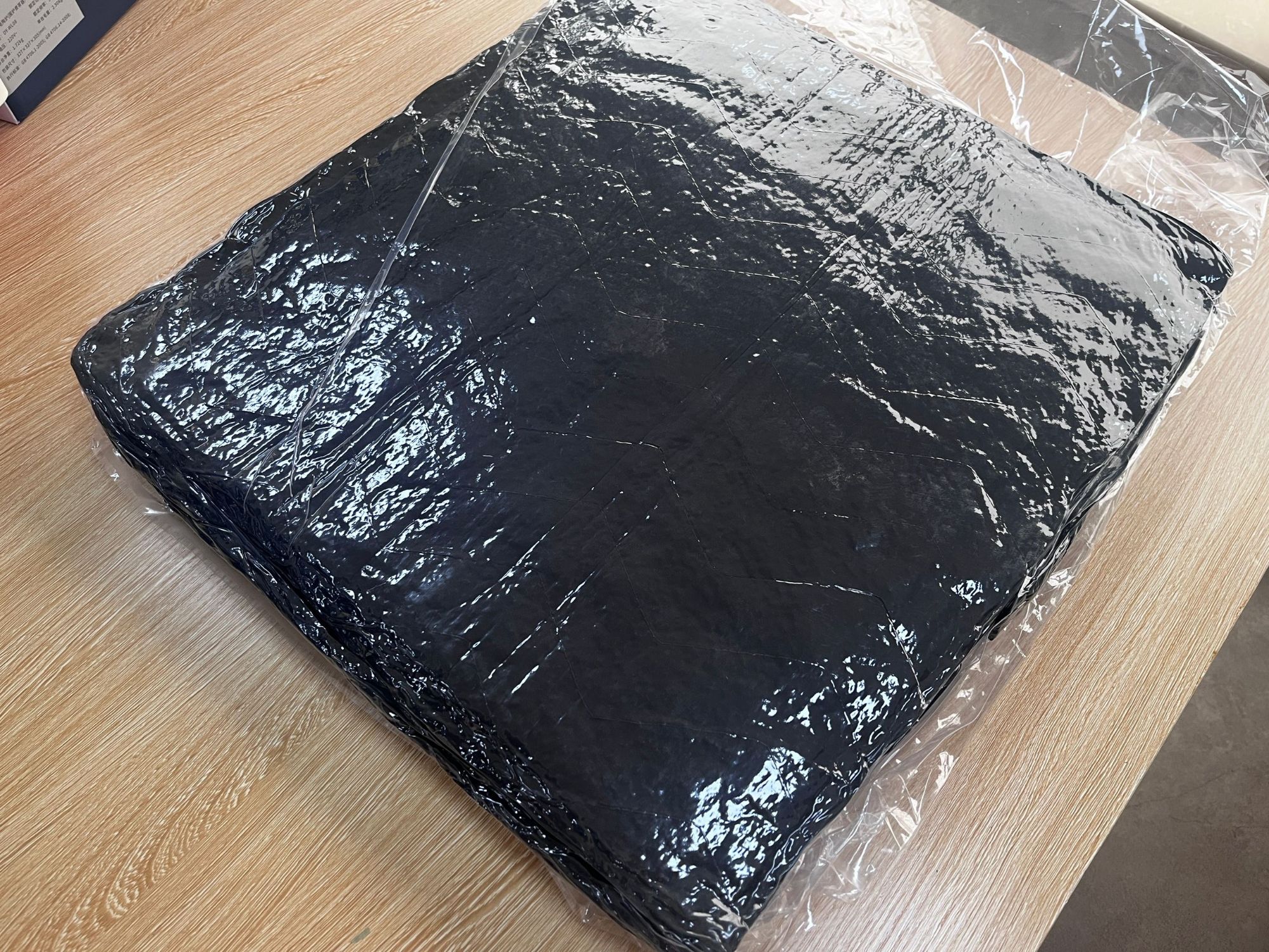
A panel’s core density sets how easily sound energy enters and gets dissipated. Lower-density cores allow air movement deeper into the material, which tends to broaden absorption across mid frequencies but can let bass pass through too quickly. Higher-density cores, by contrast, present more resistance; this often shifts useful absorption toward lower frequencies but risks reflecting upper mids if the surface becomes too compact.
Fiber type changes the microscopic path sound must travel. Fine, crimped fibers create countless small interruptions that convert particle velocity into heat, especially between 500 Hz and 4 kHz. Coarser or stiffer fibers leave wider gaps, so high-frequency waves slip through with less friction, leaving noticeable echo in untreated rooms.
The real behaviour comes from combining the two. A high-density core made from fine fibers can trap low-end energy while still calming flutter echo, but it may need an air gap or facing to avoid an overly dead midrange. Blending fiber diameters and adjusting density layer by layer gives a smoother absorption curve than relying on one material alone, which is why many effective panels use a graduated build rather than a single uniform slab.
Why Weight Alone Won't Fix Your Noise Problem
Most people assume that piling on mass is the whole story—thicker walls, heavier doors, denser panels. But noise doesn't move through a building the way water pushes against a dam. Sound finds the path of least resistance, and that path is rarely the heaviest surface you just installed. A single unsealed edge, a back-to-back outlet, or a duct that bypasses the wall can carry more acoustic energy than the entire mass-loaded barrier you spent a weekend building.
There's also a mechanical side that weight can't touch. A vibrating machine bolted to a concrete slab turns that slab into a loudspeaker. Adding more concrete simply makes the loudspeaker heavier—it doesn't stop the vibration from traveling into adjacent rooms. Without decoupling, damping, or isolation, the structure itself becomes the delivery system for noise, no matter how many pounds per square foot you stack on top.
So before you order another layer of drywall or mass-loaded vinyl, ask where the sound is actually getting through. Seal the flanking paths. Break the rigid connections. Handle the low-frequency resonance that mass alone tends to ignore. Weight helps, but it's just one tool in a kit that also needs airtightness, flexibility, and isolation.
Custom Grommets, Seams, and Fabrics Built for Industrial Wear
Most off-the-shelf workwear fails at the same handful of stress points—pocket corners, belt loops, and the edges of tool openings. That's why our industrial line starts with grommet placement, not as an afterthought. Each brass or stainless grommet is set into a reinforced fabric patch before the main panel is assembled, so the hole won't tear into the surrounding weave under repeated loading. We also offset the grommets slightly from folded hems to keep them from biting into the same thread line.
Seams get the same treatment. Instead of relying on a single row of stitching, high-wear areas use a flat-felled construction with a secondary topstitch that spreads tension across four layers of fabric. Bar tacks are placed at the exact ends of every pocket and strap attachment—not just where the pattern template defaults—and we switch to a heavier bonded nylon thread for the seat and knee panels. The result is a seam that will outlast the fabric around it, which is the opposite of what you usually get.
Fabric choice is the third piece. We don't spec a single 'heavy' material for the whole garment. Instead, the torso uses a 12 oz. cotton duck with a light water-repellent finish, while the elbows and knees get a 1000-denier Cordura overlay that resists abrasion without stiffening the joints. For high-heat environments, we offer a meta-aramid blend that stays flexible to 400°F. Every lot is tested for tear strength and seam slippage before it's cut, so the numbers on the spec sheet match what shows up on the loading dock.
The Most Common Installation Errors That Undermine Acoustic Blankets
Gaps are the silent killer of acoustic blanket performance. When panels are hung like ordinary curtains with open spaces at the top, bottom, or between adjacent pieces, sound simply travels around the material instead of being absorbed or blocked. Even a narrow gap along the floor or an unsealed vertical seam can reduce a blanket's effective noise reduction by half or more, especially at mid and high frequencies where flanking is most noticeable.
Compression is another frequent issue. Pulling blankets tight against a wall, machine, or enclosure crushes the internal fibers and air pockets that do the actual sound-dampening work. Once the material loses its loft, it starts behaving more like a thin sheet than an acoustic barrier. The same applies to using too few anchors: sagging sections create new gaps and let noise escape around the edges, which is particularly damaging in industrial settings with constant vibration.
Overlaps and isolation are often overlooked. Hanging panels edge to edge without overlapping the seams or sealing them with hook-and-loop tape or zippers leaves a direct path for sound leakage. Worse, fastening a blanket so tightly to a vibrating pipe or pump housing can turn it into a secondary radiator, transmitting mechanical noise instead of dampening it. A small gap between the source and the blanket, plus proper edge sealing, usually makes a bigger difference than adding more layers of material.
Red Flags to Spot When Vetting a Soundproofing Blanket Factory
One of the first things that should make you pause is a factory that can't back up its acoustic claims with real test data. A legitimate soundproofing blanket manufacturer will have independent lab reports for transmission loss or sound absorption, and they won't hesitate to share them. If the sales rep dodges your request for a third-party test report, or sends you a datasheet with numbers that don't match the product you're actually discussing, that's a sign you're dealing with a middleman or a factory that cuts corners on materials.
Pay close attention to how the factory handles material specifications. Ask direct questions about the core filler—whether it's mass-loaded vinyl, fiberglass, or recycled cotton—and the exact density or weight per square meter. Vague answers like "high-quality acoustic material" or "standard insulation" are red flags. A factory that truly controls its production line will know these numbers off the top of their head. Also, request a physical sample and compare it to the spec sheet; if the sample feels lighter, thinner, or has visible inconsistencies in stitching, that's exactly the kind of quality drift you'll get in a bulk order.
Finally, watch for reluctance around factory audits and quality control processes. A soundproofing blanket factory that refuses a video walkthrough or avoids giving you a clear production timeline may have something to hide—unstable supply chains, outsourced assembly, or inconsistent batch quality. Check how they handle complaints or defects: do they offer a clear remedy, or do they blame the shipping company? The way a factory talks about its own QC failures tells you more than any polished brochure. If they claim "zero defects ever," run the other way.
FAQ
In high-noise zones like stamping or compressor rooms, the extra mass in a heavyweight blanket lowers the resonant frequency of the panel, so it stops more low-frequency rumble instead of just soaking up high-end hiss. Standard quilted pads flutter against the machine housing at higher sound pressure levels; a dense, limp composite stays put and keeps transmission loss stable.
Ask for third-party sound absorption coefficients and transmission loss values measured across the 125 Hz to 4 kHz range, not just a single NRC number. A reputable factory will also provide fire rating documentation and oil resistance test results if the blankets will sit near hydraulic lines or cutting fluid mist.
Reinforced foil or silicone-coated fiberglass cloth reflects some sound back while protecting the absorber from coolant and sparks. But if the blanket is placed inside an enclosure, a porous fabric facing often works better because it lets sound enter the absorber instead of bouncing it around. The right choice depends on whether you need to shield the blanket or maximize absorption at the surface.
If the blanket shifts or sags after a few weeks, it creates air gaps that leak noise and cut performance dramatically. Heavy-duty grommets spaced every 12 to 18 inches, plus industrial hook-and-loop overlap, keep the blanket sealed against equipment frames. For pipe and duct runs, lacing hooks along the seam often beat adhesive strips in hot, dirty environments.
The biggest one is treating them like curtains and leaving an air gap behind the blanket without sealing the perimeter. That turns the blanket into a partial barrier and wastes the low-frequency benefit. Also, overlapping seams by only an inch or two lets noise flank through the joint. A proper overlap of at least 6 inches, with the hook-and-loop fully engaged, keeps the system closer to its lab-tested performance.
Many blanket manufacturers work from customer-supplied photos and dimensioned sketches to create flat patterns with cutouts and notches. They may charge a one-time pattern fee, but subsequent orders reuse the same template. For complex 3D shapes, on-site measurement by the factory or a local service is often cheaper than repeated trial-and-error shipping.
Beyond about 4 to 6 inches, added thickness brings diminishing returns unless the blanket includes a high-mass barrier layer between absorber layers. Extremely thick all-absorber blankets can also become too heavy to hang safely from roof trusses. In retrofit projects, combining a 2-inch dense fiber absorber with a 1-pound-per-square-foot mass loaded vinyl barrier often outperforms a single 6-inch fiber-only blanket while cutting total weight.
Conclusion
A truly heavyweight sound-absorbing blanket earns its name from more than just scale weight. It comes down to how the mass is distributed across the core: high-density fiber layers, often a mix of dense glass wool and resilient polyester batting, do the real work of dissipating acoustic energy. Fiber type matters as much as total pounds per square foot. A limp, loosely packed blanket can weigh a lot and still let mid- and low-frequency noise pass through. Weight becomes useful only when it is paired with the right internal structure, so chasing the heaviest spec without checking density and fiber composition often leads to disappointment.
The same practical lens applies to factory selection and installation. Look for manufacturers who offer custom grommets, reinforced seams, and industrial-grade facing fabrics that survive repeated handling, oil mist, or outdoor exposure. Even the best blanket underperforms if it is hung with gaps, overlapped incorrectly, or pulled too tight against vibrating surfaces. During vetting, watch for red flags like vague density data, refusal to share test reports, or limited options for edge finishing. A factory that understands real-world noise control will ask about your specific sound source, not just quote a weight and move on.
Contact Us
Contact Person: Shelly
Email: [email protected]
Tel/WhatsApp: 86-577-64286522
Website: https://www.topmovingpad.com/