

Halogenated Aromatic Intermediate Company: Driving Innovation in Specialty Chemicals
2026-09-28
In a sector where precision and purity define success, halogenated aromatic intermediates often remain the unsung heroes behind advanced materials and agrochemicals. Yet few companies manage to turn these niche building blocks into genuine competitive advantages. DSL Chemicals is one of them—quietly redefining what specialty chemical innovation can look like. This post explores how their approach is shaping the next wave of high-performance chemistry.
Halogenation Chemistry with a Focus on Cleaner Reaction Profiles
Classical halogenation often brings to mind corrosive chlorine gas, fuming bromine, or stoichiometric metal halides that leave behind heavy waste streams. Cleaner reaction profiles aim to replace these with bench-stable, atom-efficient reagents such as N-halosuccinimides, trichloroisocyanuric acid, or even halide salts paired with an oxidant. The shift is not merely about swapping one reagent for another; it involves redesigning the catalytic cycle so that halogen atoms are delivered selectively and the only byproducts are water, nitrogen, or simple inorganic salts.
A major hurdle in cleaner halogenation is controlling regioselectivity without over-halogenation. Recent work uses visible-light photoredox catalysis, hydrogen-bonding organocatalysts, and engineered haloperoxidase enzymes to direct chlorine or bromine to a single position on complex scaffolds. For example, flavin-dependent halogenases achieve para-selective chlorination in aqueous buffer at room temperature, where traditional electrophilic aromatic substitution would require harsh acids and produce mixtures. Such enzymatic and biomimetic routes highlight how mild conditions can rival or exceed the precision of older methods.
Solvent choice also shapes the cleanliness of a halogenation profile. Replacing chlorinated solvents with water, supercritical carbon dioxide, or recyclable ionic liquids reduces the environmental footprint and simplifies product isolation. In many cases, the halogen source itself can be generated in situ from sodium chloride or sodium bromide using an electrochemical cell, avoiding transport and storage of hazardous halogens. These combined advances—safer reagents, selective catalysis, and greener media—are making halogenation a more practical step in pharmaceutical and agrochemical synthesis.
Aromatic Intermediates That Survive Downstream Chemistry
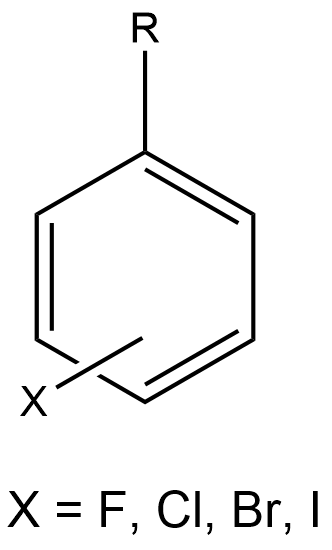
Aromatic intermediates often get labeled as fragile, but plenty of them stand up to the rough conditions of downstream chemistry. Take halogenated benzenes or nitroaromatics—they don't just sit there waiting to be isolated; they survive oxidations, reductions, and metal-catalyzed couplings without falling apart. The trick lies in how the ring's electron distribution stabilizes reactive sites, letting you carry a bromine or a nitro group through multiple steps before you finally transform it.
What makes this survival possible is a mix of resonance and careful synthetic planning. For example, an electron-poor aromatic ring can shrug off nucleophilic attack that would wreck a simpler alkene. Meanwhile, a well-chosen directing group can protect a sensitive position while you functionalize elsewhere. That means you can build complexity step by step, keeping your aromatic core intact until the last moment—no need to babysit a fragile intermediate or redesign the route halfway through.
Experienced chemists lean on these robust building blocks precisely because they reduce rework. Instead of losing material to side reactions, you get a predictable handle that behaves the same way in the pilot plant as it does in a small flask. And when the downstream chemistry includes harsh acids, strong bases, or high temperatures, a resilient aromatic intermediate often becomes the difference between a clean scale-up and a troubleshooting nightmare.
Bromination and Chlorination Services Without Long Lead Times
Most chemical suppliers treat halogenation as an afterthought—long queues, rigid batch schedules, and vague delivery windows that quietly derail your project timeline. We built our bromination and chlorination workflow around a different assumption: your synthesis shouldn't stall because someone else's reactor is booked for another three weeks. Small-batch runs start within days, not months, and our dedicated halogenation line keeps your material moving without competing against unrelated production campaigns.
What makes the speed possible isn't a shortcut in chemistry—it's a deliberate simplification of everything around it. We pre-qualify a focused set of brominating and chlorinating agents, maintain ready-to-use glass and Hastelloy reactors, and run process analytics in parallel rather than sequentially. The result is a service that handles common substrates—aromatics, alkenes, activated methylenes, and heterocycles—with the same urgency as a custom synthesis, but without the custom-synthesis price tag or the six-week wait.
If your current provider treats lead time as a fixed constraint, let us show you a different cadence. You send the starting material and target specification; we return a halogenated product with full characterization, typically before your old supplier would have even scheduled the kickoff call.
Purity and Isomer Control for Demanding Specialty Applications
Trace impurities rarely announce themselves in a spec sheet, but in specialty applications they can quietly destabilize an entire downstream process. A chiral intermediate destined for an API may carry a 0.2% enantiomeric excess that looks acceptable on paper, yet that minor fraction can seed unwanted crystal forms or alter bioavailability in ways that only surface during late-stage clinical work. The same holds for electronic-grade solvents where part-per-billion metal residues shift dielectric constants or accelerate corrosion on copper interconnects. Purity here is not a marketing claim; it is a boundary condition for reliable performance.
Isomer control demands more than choosing a column or a resolving agent. For molecules with multiple stereocenters or cis/trans flexibility, the thermodynamically favored form is often not the one the customer needs. Dynamic crystallization can drive a racemate toward a single enantiomer, but only if the solubility differences between diastereomeric salts are large enough across a narrow temperature window. In other cases, kinetic control via asymmetric hydrogenation gives high enantioselectivity for a specific substrate, yet fails when the same catalyst faces a substituted analogue. Real process development means mapping these boundaries quickly and pairing them with in-line analytics so batch-to-batch drift is caught before it becomes a quality event.
Fragrance and liquid crystal markets illustrate why isomer ratios cannot be treated as a rounding error. A cis-3-hexenol impurity shifts the green, leafy note of a fragrance into a fatty, metallic off-note even at sub-percent levels, while in nematic liquid crystals a small increase in the cis isomer fraction lowers the clearing point enough to shrink the usable temperature range of a display. These are cases where the customer's formulation is built around a specific isomer profile, not just a minimum purity threshold. Suppliers who engage early in the design of those profiles, rather than simply delivering a certificate of analysis, become partners in the application rather than vendors of a molecule.
Scale-Up from Bench to Commercial Quantities with Fewer Surprises
Moving a reaction from a 10 mL flask to a 5000 L reactor rarely goes as smoothly as the lab notebook implies. The gap between bench-scale elegance and plant-floor reality is where most scale-up surprises hide—things like heat transfer differences, mixing dead zones, and impurity profiles that only emerge under longer hold times. One way to shrink this gap is to treat scale-up as a design exercise rather than a multiplication problem. Instead of simply increasing batch size, you interrogate each unit operation at the smallest practical scale where the same physics still apply. For example, a crystallization that works in a 2 L round-bottom flask might fail in a 200 L vessel because the cooling rate is no longer uniform. By running small-scale mimics of the plant geometry—using baffles, realistic agitator tip speeds, and controlled nucleation—you can catch those failures before they cost a full production batch.
Another source of surprises is the assumption that raw material quality and analytical methods will translate unchanged. A reagent that is 98% pure at lab scale may arrive at 94% at tanker scale, and that difference can shift an impurity profile enough to fail spec. Similarly, an HPLC method developed on a 50 mg sample may struggle with sampling variability from a 50 kg drum. Building scale-down models that deliberately include lower-purity lots and deliberately imperfect mixing can reveal which parameters truly control the process. This approach—often called “worst-case” or “edge-of-failure” testing—turns potential plant failures into known operating ranges. When you already know that the reaction tolerates a 5% excess of one reagent and a ±10°C exotherm, the commercial run feels less like a gamble.
Finally, document the assumptions behind every scale-up decision. A process that relies on a single highly experienced operator’s “feel” for the endpoint is a process waiting to surprise you at 2 a.m. on a weekend shift. Replacing tacit knowledge with measurable triggers—like a torque reading, a pH inflection, or an in-situ particle size trend—makes the transition from bench to plant more reproducible. The goal is not to eliminate all surprises, but to convert them from catastrophic unknowns into manageable deviations with pre-agreed responses. When the plant run starts and the first few batches match your predicted range rather than your best-case lab result, that is the quiet payoff of thinking ahead.
Direct Access to Process Chemists Who Know Halogenated Aromatics
When a route hits a stubborn halogenation step or an unexpected regiochemical shift, being able to pick up the phone and talk to someone who has actually run that reaction on scale changes everything. Our team includes process chemists who have spent years focused on halogenated aromatics—not as a side interest, but as their main working territory. They know the quirks of brominating activated rings without touching the wrong position, the tricks to keep iodine from stalling at the electron-poor substrate, and the headaches that come with selective fluorination when a metal catalyst is in the pot.
That direct access means you don’t have to translate your problem through layers of sales or generic support. You describe the impurity profile, the exotherm you’re seeing, or the way your yield drops when you switch from lab glass to a pilot reactor, and the person on the other end has likely dealt with something similar. They can tell you which halogen source behaves better in your solvent system, when a radical pathway makes more sense than electrophilic substitution, or why your particular aryl chloride refuses to participate in a coupling no matter how much ligand you add.
What makes this different from a typical technical service hotline is that the conversation stays rooted in practical, stirred-reactor reality. These chemists have seen halogenated aromatics misbehave in ways that don’t show up in a clean publication. They’ve fixed discoloration in brominated intermediates, traced iodide carryover ruining a downstream Suzuki step, and adjusted chlorination conditions to avoid ring degradation on a fragile scaffold. You get answers backed by run sheets and repair notes, not just literature citations.
FAQ
They serve as building blocks that allow medicinal chemists to fine-tune drug candidates' metabolic stability and binding affinity, especially when fluorine or chlorine is introduced at specific ring positions.
We run most exothermic halogenations in jacketed reactors with automated dosing, and our process safety team reviews thermal data before any scale-up. Smaller riskier steps stay in continuous flow where heat transfer is easier to manage.
Agrochemical and pharmaceutical programs are the largest share, but we also supply specialty polymer and electronic materials customers who need high-purity brominated or fluorinated building blocks.
We treat route scouting as a joint exercise. Clients share the target profile, and our chemists propose three or four distinct routes with cost, purity, and waste trade-offs before committing to a scale-up campaign.
One client needed a meta-substituted aryl iodide that was prone to dehalogenation under basic conditions. We shifted to a low-temperature lithium-halogen exchange and isolated the product at 99.2% purity without chromatography.
Each intermediate has a control strategy based on the impurities that actually affect downstream performance, not just a generic HPLC sheet. We also keep retain samples for every lot and run stability checks if storage beyond six months is expected.
We recover bromine and iodine from process mother liquors through electrochemical oxidation, and any halogenated solvent waste is segregated for high-temperature incineration with energy recovery rather than general landfill.
Conclusion
Few specialty chemical suppliers treat halogenation as more than a unit operation. This company has built its entire development model around it, and that focus shows in the details. Their bromination and chlorination work is designed with cleaner reaction profiles from the start, reducing heavy metal residues and solvent waste before they become downstream problems. The aromatic intermediates they produce are not just made to spec on paper; they are stress-tested against the harsh conditions of later coupling, reduction, or cross-coupling steps. That means fewer surprises when a building block moves from their reactor into a customer's process. Purity targets and isomer ratios are treated as design parameters, not afterthoughts, which matters when a specialty application cannot tolerate even minor positional impurities.
Scale-up is where many halogenated aromatic projects stall, but this team shortens that path by pairing bench chemistry with commercial reality from day one. Process chemists who actually run brominations and chlorinations are available directly, not hidden behind layers of sales or project management. That direct access lets customers adjust stoichiometry, solvent choices, or workup methods before a campaign is locked in. The result is a supply partner that can move from grams to kilograms to multi-ton lots without long lead times or revalidation loops. For teams working on agrochemicals, electronic materials, or pharmaceutical intermediates, that combination of technical depth and responsive scaling is what turns a specialty chemical need into a reliable supply chain.
Contact Us
Contact Person: Wei Zhang
Email: [email protected]
Tel/WhatsApp: 862163529955
Website: https://www.dslchem.com