

China Suction Dredger Manufacturer: Your Guide to Reliable Dredging Solutions
2026-10-08
When a dredging project stalls because of equipment that can't handle silt or tight schedules, the problem usually isn't the site—it's the supplier. As one of China's specialized suction dredger manufacturers, YaKai Dredger has been quietly reshaping what contractors expect from dredging machinery. This guide walks you through the key factors that separate dependable dredgers from costly disappointments, and why many project managers now look beyond familiar names to get the performance they were promised.
What separates a dependable China suction dredger builder from the rest
Real dependability starts with the yard's willingness to show you its past projects without hesitation — not just glossy photos, but hull numbers, operating hours, and the names of actual owners you can call. A trustworthy builder in China won't hide behind a sales agent; they'll invite you to the workshop floor, let you inspect weld seams before paint, and walk you through their hydraulic routing logic as if you were an engineer on their own team.
The difference also shows up in component choices. A dependable dredger builder doesn't quietly swap in a cheaper pump or a generic PLC just to shave a few thousand dollars off the quote. Instead, they'll explain why a particular brand of dredge pump pairs better with a given cutter drive, or why they insist on stainless steel wear plates in the suction mouth even when the spec sheet doesn't demand it. That level of detail means fewer surprises when the dredger is finally cutting through compacted sand at 3 a.m.
After-sales support is where many yards fall apart. A builder worth trusting will keep a full set of as-built drawings, offer remote troubleshooting via video within hours — not days — and stock critical wear parts in a nearby warehouse rather than manufacturing them from scratch after every breakdown. You can feel that reliability in the pre-delivery inspection too: the wiring is labeled, the bilge pumps are tested under load, and the captain's manual actually reflects the vessel you are buying, not a generic template from five years ago.
Matching vessel specs to sediment, depth, and discharge distance realities
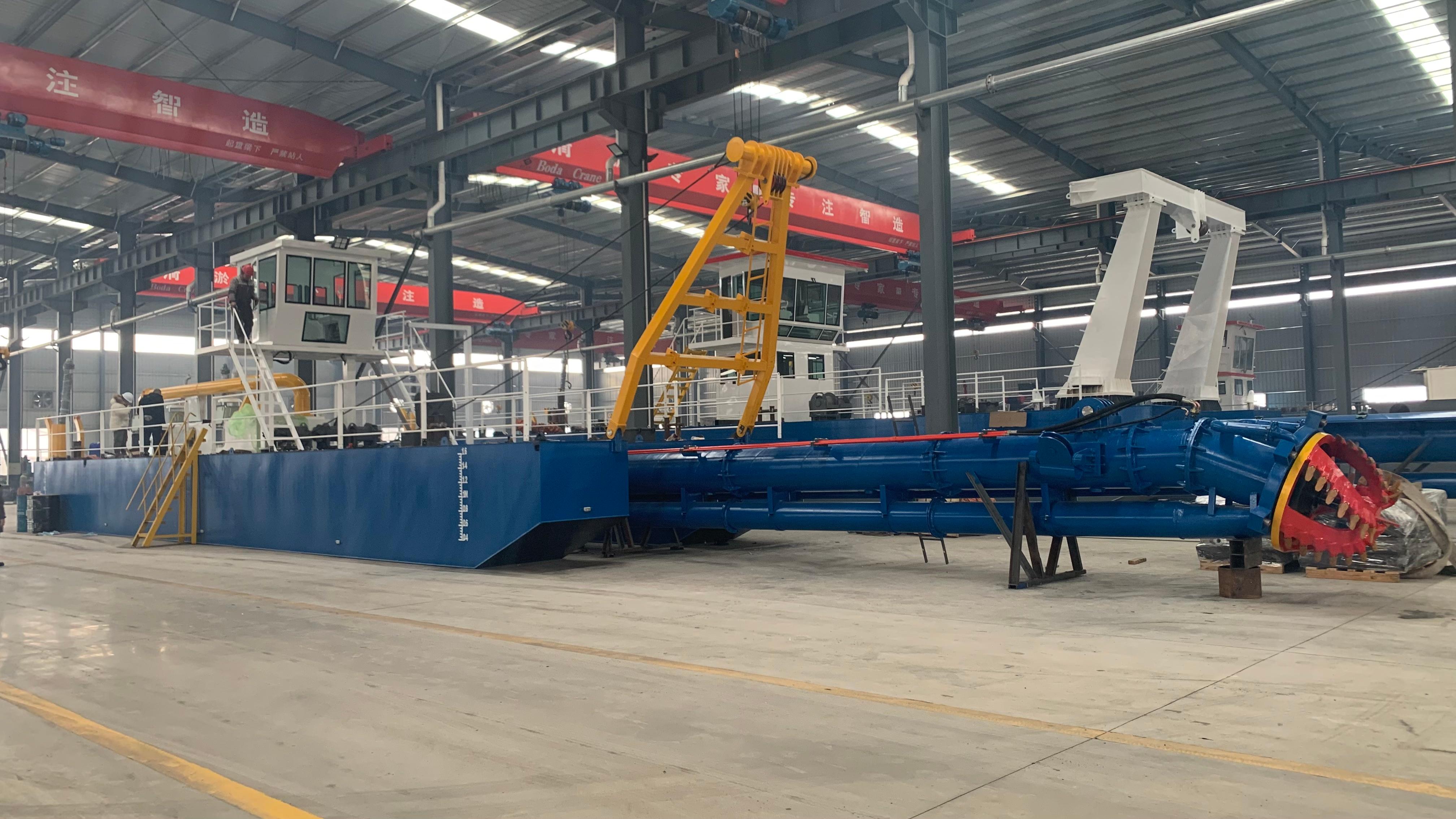
Choosing a dredger without accounting for grain size, water depth, and how far the spoil needs to travel is a fast way to burn fuel and miss production targets. Fine silts and clays behave nothing like coarse sands or gravels once they leave the cutterhead, so pump curves and pipeline diameters have to match the material you actually expect on site. A vessel that shines in shallow, sheltered channels may struggle in open water with a long run to the placement area, and vice versa.
Depth is often treated as a simple draft question, but it also dictates suction head, ladder angle, and whether a cutter suction dredger can even work effectively at the bottom of its range. If the discharge distance is short, a standard centrifugal pump may do the job; push that same slurry a few kilometers and you need booster stations or a larger impeller just to keep the solids moving. The numbers only work when they are tied to the real profile of the job, not a generic specification sheet.
The practical approach is to start with the sediment survey, then work backwards through pump performance and pipeline friction before settling on a hull size. It is also wise to add margin for unplanned variations—sediment often turns out finer or coarser than the boreholes suggested, and discharge routes can change once permits and land agreements come into play. A vessel that matches the measured conditions with a little headroom will always outperform a bigger, more expensive unit that was picked on guesswork.
Inside the manufacturing floor: materials, welding, and quality checkpoints
Raw steel coils roll in from the loading dock, each stamped with heat numbers that trace back to the mill. Before any cutting or forming, the material sits in a quarantine zone where metallurgists pull samples for spectrographic analysis. They check carbon content, tensile strength, and surface defects—anything that could compromise a seam later. Not every batch makes it through. A coil with micro-cracks near the edge gets returned, even if it means delaying the line. That upfront rejection saves hours of rework downstream.
Welding stations run three shifts, but the process isn't just about laying a bead. Each joint follows a preset weld procedure specification—voltage, wire feed speed, travel angle, and preheat temperature all locked in. Operators watch the puddle, not the clock, adjusting in real time when the gap between parts drifts. After every twenty frames, a test coupon goes to the lab for a bend test and macro etch. If the weld penetrates too shallow or traps porosity, the station halts and the fixture gets recalibrated before the next unit moves through.
Quality checkpoints are spaced so no flaw travels far. After welding, parts pass under a laser scanner that maps the seam profile against the CAD model. A separate station does ultrasonic testing on critical joints, looking for internal voids that a visual check would miss. Each scan logs a unique serial number, so if a field failure ever comes back, the team can pull the exact heat, operator, and torque settings from that afternoon. The final gate is a dimensional audit: a coordinate measuring machine checks hole positions and flange angles on every fiftieth assembly. Anything outside tolerance gets quarantined, and the root cause is chased before the line restarts.
Hidden ownership costs that emerge after the first operating season
After the first full season of running a boat, the real cost picture starts to sharpen. You budgeted for fuel, dockage, and the purchase price, but then the shrink-wrap bill arrives, the bottom paint looks worse than expected, and the trailer bearings need repacking sooner than anyone mentioned. These aren't dramatic failures—they're the quiet, recurring expenses that don't show up in the manufacturer's brochure.
One of the biggest surprises is storage. Even if you planned for winter layup, the actual costs often creep up once you factor in indoor versus outdoor rates, mast stepping or unstepping for sailboats, and the labor to properly winterize engines and plumbing. Add in a mid-season haul-out for an unexpected vibration, and the first-year ownership premium becomes obvious.
Then there's the slow drip of consumables and minor upgrades. Zinc anodes, impellers, filters, specialized cleaners, and the tool you didn't know you needed until the third weekend. None of them break the bank individually, but together they form a hidden layer of ownership cost that many new owners only discover after the first operating season ends.
Field notes from ports, reservoirs, and inland waterway projects
Walking the docks at a working port, you notice the concrete is never truly dry. Moisture seeps through hairline cracks, salt air leaves a crust on the pilings, and the constant rumble of cranes vibrates up through your boots. The field notes here are less about grand observations and more about small failures: a gate hinge corroded two months early, a drain clogged with plastic pellets from a spill nobody logged. Each entry reads like a maintenance confession—lubrication skipped, a sensor left in bypass, a warning light ignored because the shift was ending.
Reservoir sites have a different kind of silence, broken only by the occasional slap of water against the intake tower. You walk the riprap and find the same story repeated: a survey marker shifted by frost heave, a stilling basin filled with more silt than the model predicted, a boat launch where the concrete apron has cracked along an old cold joint. In the logbook, someone wrote 'check valves chattering' three weeks in a row, but no one recorded the sound—just the note, in pencil, as if the problem might erase itself.
Inland waterway projects are where the field notes get blunt. A lock chamber drained for inspection shows a wall scoured by decades of barges nudging too close. A cofferdam leak is described with nothing more than 'wet spot growing near sheet pile #14.' You read between the lines: the project engineer stopped taking photos after the third pump failure, the contractor's daily report stops mentioning the weather, and somewhere in the margin someone has drawn a small arrow pointing to a crack with the word 'watch.'
Questions to raise before signing off on a dredger specification sheet
A spec sheet can look impressive on paper, but the numbers only tell half the story. What is the actual dredging depth required at the project site, including tidal variations and siltation allowances? Does the sheet state maximum dredging depth at a specific cutter angle or for a particular ladder position? How will soil conditions — from loose silt to compacted clay or rock — affect the claimed production rate? Has the pump curve been matched to the expected discharge distance and slurry density, or just specified at ideal water? These questions often reveal hidden gaps.
Beyond the hydraulic performance, operational fit matters just as much. Ask about deck layout: can the spud carriage system handle the soil reaction forces without excessive wear? What is the automation level, and can the crew realistically operate it with minimal training? Look at fuel consumption per cubic metre at the projected duty point, not just the engine's rated power. Also, are there clear figures for maintenance intervals, spare parts availability, and dry-docking requirements? A dredger that works well for one harbour may be a nightmare in another if these details aren't pinned down before signing.
Finally, the commercial and classification clauses need scrutiny. What classification society will the vessel be built to, and does the spec sheet include all statutory certificates for the intended operating area? Is the delivery date tied to a sea trial that includes dredging of representative material, or just a lightship test? Warranty terms: does the builder cover dredging pump wear, cutter teeth, and electronics for a meaningful period? Ask for a performance guarantee tied to actual fuel and production, not just contract specs. Without these questions, you risk paying for a brochure figure instead of a working dredger.
FAQ
Focus on their engineering track record, whether they build in-house or outsource key components, and how transparent they are about materials and testing. A good manufacturer will walk you through previous projects and offer references without hesitation.
Ask for a detailed soil analysis review. Reputable builders will request samples or geotechnical data and recommend the right cutter head, pump size, and discharge distance instead of pushing a standard model.
You'll typically find cutter suction dredgers, jet suction dredgers, and amphibious dredgers. The choice depends on whether you're working in open water, near shorelines, or in swampy terrain.
Most established yards welcome customization. They can adjust dredging depth, pump power, hull dimensions, and even add automation for monitoring. Just be clear about your operating environment and production targets.
Depending on size and complexity, expect anywhere from three to eight months for construction, plus shipping time. Rush orders are sometimes possible, but they can strain quality control if the yard is juggling multiple projects.
Look for a manufacturer that stocks critical wear parts like impellers, cutters, and liners, and offers remote troubleshooting. Some also provide on-site commissioning and training for your crew, which pays off in the long run.
Often yes, but the real value comes from matching the right specification to your job. Avoid choosing on price alone; ask for a detailed breakdown of steel grade, pump brand, and electrical components so you're comparing like with like.
Many export-oriented yards comply with ISO 9001 for quality management and can arrange classification society certification like CCS, BV, or DNV if needed. Ask for documentation on welding procedures and hydraulic system testing.
Conclusion
When evaluating Chinese suction dredger builders, the difference between a dependable yard and the rest rarely shows up in brochures. It shows up in how they handle a sediment sample, whether they ask about discharge distance before quoting a pump size, or if they can walk you through their welding inspection routine without pausing to find the right file. A trustworthy manufacturer doesn't just hand over a polished spec sheet; they push back on unrealistic expectations—like pairing a small cutterhead with dense clay or promising high output over a two-kilometer pipeline—because they know the real operating limits. Their material choices, plate thickness, and weld profiling reflect that same honesty.
That early diligence matters more once the dredger leaves the dock. Ports, reservoirs, and inland waterway jobs quickly expose weak points: impeller wear from fine sand, fuel burn creeping up when discharge distances stretch, and unplanned downtime from cheap hydraulic fittings. Before signing off on any specification sheet, ask for a detailed lifecycle cost breakdown—spare parts availability, expected wear rates, and local service response—not just the sticker price. A builder who answers these questions plainly, without deflecting to vague capacity claims, is usually the one whose equipment keeps working season after season. Hidden ownership costs, like waiting months for a replacement pump or discovering that the hull plating wasn't prepped for abrasive silt, tend to surface within the first operating year for those who skip this step.
Contact Us
Contact Person: Nancy
Email: [email protected]
Tel/WhatsApp: (+86) 13869631558
Website: https://www.yakaidredger.com/