

Best UL FM Post Indicator Valve (PIV) Options for Fire Protection Systems
2026-10-02
Choosing the right post indicator valve (PIV) can make or break a fire protection system's reliability. With UL and FM certifications setting the bar high, facility managers and engineers need options that deliver both compliance and performance. Among the standout names in the industry, DRIFCO has earned a reputation for rugged, field-proven designs. In this post, we'll explore the best UL FM PIV choices that balance durability, ease of operation, and long-term value.
What Makes a Post Indicator Valve Truly UL/FM Compliant?
A genuinely compliant post indicator valve isn't just stamped with a logo. It has to pass cyclic operation tests under worst-case pressure, with the internal stem and target mechanism staying accurate after hundreds of open-close cycles. UL focuses on mechanical endurance and visibility of position; FM adds its own twist by testing the valve's performance when connected to typical fire protection systems, including resistance to water hammer and debris. The target and wrench nut must be ductile iron or better, and the whole assembly has to survive freeze testing if rated for outdoor use.
Tamper switch integration is another separating factor. Both listing agencies require that the switch activates reliably at the first partial turn and doesn't false-trip during normal maintenance. Wiring connections need to be potted or sealed against groundwater, and the switch housing must remain operable even if the indicator post is struck by a vehicle. Some cheaper imported valves skip the internal grounding path or use plastic target stems that warp—those fail quickly under FM's vibration protocol.
Proper marking on the casting itself is non-negotiable. The body must show the manufacturer's name, valve size, pressure rating, and both UL and FM marks cast or permanently affixed. A label that peels off isn't compliant. Beyond the plate, the open/shut target colors need to meet the contrast requirements so a firefighter can read the state from 50 feet away, even in smoke or rain. If the target flag is too small or the letters fade after UV exposure, the valve won't hold its listing.
Beyond the Basics: Key Features of High-Performance PIVs
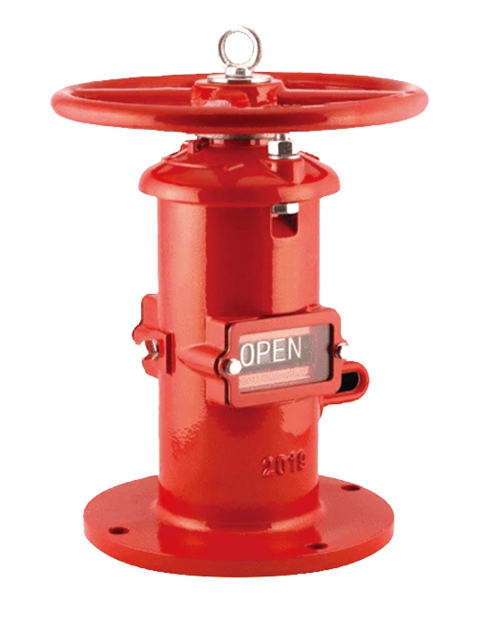
High-performance PIVs go beyond simply pushing fresh air into a loft or hallway. Many now include variable-speed fans that respond to real-time humidity and temperature readings, ramping up only when moisture levels spike instead of running at full tilt all day. This adaptive behaviour keeps energy use low while still preventing condensation on windows and walls. Look for models with a dedicated boost mode tied to a humidistat or wireless sensor—it makes a noticeable difference in bathrooms and kitchens where moisture is generated in short bursts.
Another mark of a top-tier unit is heat recovery. Rather than blasting cold outside air into the living space during winter, these systems temper incoming air using warmth extracted from the outgoing stale air. The core, often a ceramic or polymer exchanger, can recover a meaningful percentage of heat that would otherwise escape. This not only improves comfort but trims heating bills. A high-performance PIV will specify its heat exchange efficiency, typically around 70–80% for premium models, and may even offer a summer bypass to prevent overheating.
Filtration and maintenance also separate the best from the rest. Basic PIVs use a simple foam or G3 filter that needs frequent washing, but superior units feature finer F7 or ePM10 filters that capture pollen, diesel particulates, and other airborne irritants before they enter the home. Some add an activated carbon layer to reduce outdoor odours. Intelligent filter-change reminders, based on actual fan run hours rather than a fixed calendar, are a practical touch. Finally, look for low specific fan power and whisper-quiet operation at normal speed—below 20 dB(A) in the living area—so the system runs continuously without becoming a nuisance.
Gate or Butterfly? Picking the Right Valve Mechanism
Choosing between a gate valve and a butterfly valve often comes down to how much space you have and how often the valve needs to cycle. Gate valves use a flat or wedge-shaped disc that lifts completely out of the flow path, offering minimal pressure drop when fully open. That makes them ideal for long, straight pipe runs where flow restriction matters more than the physical size of the valve itself. But they take many turns of the handwheel to open or close, and the tall bonnet can eat up vertical clearance in tight installations.
Butterfly valves, on the other hand, keep a disc in the center of the flow even when fully open. That disc creates some turbulence and a permanent pressure drop, though modern offset designs reduce this significantly. The big advantage is compactness and speed: a quarter-turn handle or actuator swings the disc from full open to full shut in seconds. That makes butterfly valves the default choice for large-diameter lines, HVAC systems, and any application where you need quick isolation without a massive gearbox hanging off the pipe.
Cost often tips the decision once line size grows beyond four inches. A metal-seated gate valve in that range becomes heavy, expensive, and awkward to operate manually. A butterfly valve with an elastomer or PTFE seat handles the same job at a fraction of the weight and cost, with easier automation. However, if your process involves slurries, thick media, or frequent throttling near the closed position, the gate valve's straight-through path and robust sealing faces may still win out despite the extra installation effort. Match the mechanism to the real operating conditions, not just the nominal pipe size.
Installation Pitfalls That Can Compromise Your PIV
One of the most common mistakes is setting the post indicator valve too deep or too shallow relative to grade. When the handwheel sits below the surrounding soil line, operators struggle to reach it during an emergency, and surface water can seep into the operating nut. Conversely, if it's raised too high, the connecting pipe becomes a lever for accidental impact from vehicles or mowers. The result is a valve that looks fine on paper but fails exactly when it's needed.
Another often-overlooked issue is ignoring the direction of flow and the orientation of the indicator target. Installing the valve backward or failing to align the target so it reads "OPEN" or "SHUT" accurately creates dangerous confusion for first responders. A target that sticks, catches on the riser, or gets painted over during finishing work turns a simple status check into a guessing game. During an actual fire, that delay can mean the difference between a contained incident and a total loss.
Finally, inadequate support and lack of operational testing after backfill are silent killers. If the connecting pipe is not properly bedded and compacted, settlement will put bending stress on the valve body, eventually causing the gate to bind or the flange to leak. Even a brand-new PIV should be cycled fully open and closed after installation to confirm the target moves freely and the internal mechanism seats properly. Skipping this step leaves hidden obstructions—rocks, debris, or dried mud—inside the barrel, which can prevent the valve from closing completely when the system needs to be shut down.
Extending the Life of Your Post Indicator Valve: Maintenance Essentials
A post indicator valve that gets ignored will eventually make its presence known at the worst possible moment. The stem and target assembly tends to collect moisture inside the housing, and once corrosion starts around the packing gland, the valve gets harder to turn. If you notice the target flag sticking or the wrench nut feeling gritty instead of smooth, that’s usually the first sign the internal parts need cleaning and fresh grease. Pull the indicator cover, wipe down the operating stem with a clean rag, and use a non-petroleum lubricant on the threads and exposed metal. Do not force a stiff valve; work it slowly through its full travel and then back to the open position.
Beyond the stem, pay attention to the condition of the gasket and the alignment of the target disc. A bent or faded target can make it hard to tell whether the valve is open or closed from a distance, which defeats the whole purpose of the indicator. Check the bolts around the housing for tightness, but avoid overtightening them against brittle gasket material. If the valve sits in an outdoor enclosure, clear away leaves, snow, or insect nests that block the drain hole. A little scheduled attention every six months, combined with an annual operation test under low flow conditions, will keep the valve responsive far longer than reactive repairs ever will.
Matching PIV Specifications to Your Fire Protection Needs
Instead of grabbing any listed PIV, start with the actual water supply and the expected system demand. A 4-inch valve may look fine, but if the underground main is 6 inches and the sprinkler or standpipe needs full flow at low pressure, the smaller barrel and clapper create unnecessary friction loss. Verify the valve size against the hydraulic calculations, not just the pipe diameter. Also check the opening direction: some jurisdictions require counterclockwise opening, while older stock or nearby municipalities may still use clockwise. Getting this wrong can delay the fire department when seconds count.
For monitored systems, the supervisory switch matters more than the valve body color or casting style. Choose a PIV with an internal tamper switch that triggers on partial closure, not just full shutoff, so a bumped handwheel or a partially closed gate is caught early. Confirm the bury depth and operating nut height before ordering: a wrench nut that sits too low in the yard box invites dirt and ice, while one that sticks up too high gets clipped by mowers or snowplows. In corrosive or coastal settings, ask for an epoxy-coated or stainless stem and fasteners up front. These are the details that keep the valve usable during an actual fire rather than just compliant on paper.
FAQ
Most commonly you'll see outside screw and yoke (OS&Y) gate valves and butterfly valves in post indicator housings. Gate valves give you a slower, more controlled fill and are easier to throttle if needed, while butterfly valves are lighter and cheaper for larger diameters. Both can carry the UL and FM marks as long as the full assembly—valve, post, and indicator—is listed together.
4-inch through 12-inch are the workhorses, with 6-inch and 8-inch being the most common for commercial risers. Go larger only if hydraulic calculations demand it; oversizing just adds cost and makes the wrench harder to turn. Always match the PIV size to the underground pipe, not the riser, to avoid a bottleneck.
Ductile iron bodies with fusion-bonded epoxy coating inside and out are a solid default. For worse conditions, look for stainless steel trim, bronze internals, and a factory-installed sacrificial anode kit. Avoid bare cast iron below grade—you'll be digging it up within a decade.
High-rise systems often benefit from a gate valve PIV because the slower opening reduces water hammer on the standpipe. But if weight and space are tight, a UL/FM-listed butterfly with a gear operator works fine. Just make sure the indicator flag still shows open/closed clearly after the operator is installed.
Not all, but it's becoming widely expected. The tamper switch sends a supervisory signal if someone partially closes the valve, which is critical for compliance and for catching accidental shutoffs. If the PIV doesn't come with one, budget for a field-installed switch that is listed for the specific valve model.
The direction of operation—whether the valve opens clockwise or counterclockwise—is often ignored until the fire department arrives and can't figure out which way to crank. Verify the handle's open direction against the local fire code. Also check the burial depth of the connecting pipe so the new post isn't too short or too tall.
UL tends to focus on safety and electrical integration (like tamper switches), while FM puts more weight on durability and loss prevention under real fire conditions. A valve carrying both marks is the safest choice, but if you're in an FM-insured property, prioritize the FM approval to keep the underwriter happy.
Conclusion
Choosing the right post indicator valve isn't just about picking a familiar brand name or the lowest bid. True UL/FM compliance goes beyond a sticker—it means the valve body, stem, and supervisory switch have all passed rigorous testing for durability, corrosion resistance, and reliable operation under fire conditions. High-performance PIVs stand out with features like non-rising stems, tamper-resistant locking mechanisms, and a clear, weatherproof indicator that refuses to fog or jam. When it comes to the valve mechanism itself, the gate versus butterfly debate often comes down to water hammer and space constraints. Gate valves remain the traditional choice for buried applications because they offer full, unobstructed flow and are less prone to chatter. Butterfly valves, by contrast, are lighter, more compact, and easier to open or close quickly, but require careful torque management to avoid damaging the disc seal.
Even the best PIV will underperform if installed wrong. Common pitfalls include setting the valve too deep or too shallow, failing to provide proper thrust restraint on underground piping, and forgetting to align the indicator target so it actually reflects the valve's true position. After installation, maintenance is not optional. Regular exercising of the valve, lubricating the stem, and checking the supervisory switch wiring keep the assembly ready for the day it's actually needed. Finally, matching PIV specifications to your fire protection needs means considering system pressure, pipe size, ambient temperature, and whether the valve will be exposed to road salt or industrial chemicals. A valve that is perfect for a light commercial riser may fail quickly in a coastal or heavy-vehicle environment. By balancing compliance, mechanical design, and site-specific demands, you can select a post indicator valve that remains dependable for decades instead of becoming a silent weak link.
Contact Us
Contact Person: George
Email: [email protected]
Tel/WhatsApp: 13863633883
Website: https://www.es-fire.com