

Aromatic Carbonyl Intermediate Distributors Worth Your Trust
2026-09-18
In the competitive landscape of fine chemical sourcing, the quality of aromatic carbonyl intermediates can make or break your final product. Yet, too many suppliers still treat these compounds as commodity items, leaving you to deal with inconsistent purity, delayed shipments, and opaque specifications. That’s where a partner like DSL Chemicals changes the equation. With a focus on reliable, well-characterized aromatic carbonyl intermediates and a supply chain built for demanding applications, this is a name worth remembering. Let’s explore why their approach deserves your trust—and how the right intermediate can elevate your next project.
A Paper Trail That Survives Any Audit
Auditors don’t expect perfection; they expect a narrative they can follow without guessing. That means every transaction needs a date, a counterparty, a purpose, and a matching document. A receipt by itself proves little if the bank statement doesn’t show the same outflow on the same day. Keep the sequence tight, and cross-reference everything with an invoice number or a ledger entry. If you can hand an auditor a folder where page three naturally explains page one, you’ve already cleared the hardest hurdle.
Digital tools help, but they’re not a substitute for a consistent naming and filing habit. A scanned receipt named ‘IMG_2047.jpg’ is no better than a crumpled slip at the bottom of a bag. Name files by date, vendor, and amount, then store them in monthly folders tied to your accounting software. Print or export the few documents that truly matter—signed contracts, loan agreements, major asset purchases—and keep a short index of where the originals live. It sounds tedious, but audits fall apart when the trail relies on someone’s memory instead of a system.
When the audit letter arrives, the real test is whether someone else can reconstruct your year without calling you every ten minutes. Build redundancy: cloud backup, local copy, and a one-page summary of unusual items. Leave notes for anything non-standard—a partial refund, a barter deal, a personal expense reimbursed later. That honesty at the point of entry saves hours of awkward explaining later. A paper trail that survives isn’t the thickest one; it’s the one that leaves no gaps for doubt to creep in.
Testing Beyond the Certificate of Analysis
A certificate of analysis can feel like a firm handshake—it looks reassuring, but it only tells you what the supplier wants you to see. Independent checks peel back that layer. When a batch leaves the dock, its actual composition can shift due to humidity, transit time, or even the way it was stored before departure. Testing beyond that single sheet means sending samples to a lab you control, not one hired by the vendor, and comparing results against the original paperwork before anything reaches the production floor.
This extra step often uncovers things a standard CoA misses. Residual solvents, heavy metal speciation, or microbial counts that sit just under the reportable limit can pass through unnoticed on paper. Running a broader panel—think aflatoxins on botanical inputs or plasticizer traces in oils—gives a clearer picture of what you are actually handling. It also builds a history. Over time, your own data set shows which suppliers drift, which lots need rework, and which certificates you can trust at a glance.
There is also a quiet value in the habit itself. Teams that verify externally tend to notice anomalies earlier, whether it is a color shift in a powder or an off note in an extract. That kind of attention does not come from a signed form; it comes from repeated, hands-on comparison. In the end, testing beyond the certificate is less about catching a bad actor and more about knowing your materials well enough to stop a small variance from becoming a recall.
Safety Stock That Keeps Your Line Running
Most lines don’t stop because demand doubled overnight. They stop because a minor part—a fitting, a label roll, a specific resin—wasn’t in the bin, and the reorder point was set three years ago by someone who no longer works here. Safety stock should not be a flat “two weeks of average use.” That approach quietly assumes every supplier delivers on time and every week looks like the last one. When either assumption breaks, the line doesn’t care about your spreadsheet.
A better starting point is lead-time variability plus actual daily demand swings, not the monthly average. If a supplier usually ships in five days but occasionally takes nine, and your usage can jump 20% without warning, calculate the buffer that covers that gap at a service level you can defend. Then adjust it every quarter. A part that was stable last year may now sit on backorder for two weeks because a raw material shortage shifted upstream. Static safety stock is just a guess with extra steps.
Also watch the slow movers. It’s tempting to cut them deep to free up cash, but a two-dollar O-ring that halts a high-margin packaging line costs far more than the carrying charge. Keep a running list of parts where a stockout stops production immediately, and give those the most attention—even if their usage is low. The line keeps running when the unglamorous parts are there, not when the warehouse looks lean on a report.
Custom Synthesis, Minus the Guesswork
Most custom synthesis projects stall before they start—unclear specs, shifting timelines, and results that don’t match the brief. We remove that friction by turning your target molecule into a defined route, with every step mapped against real bench data, not optimistic estimates.
From milligram screening to multi-gram delivery, you get the exact structure you asked for, verified by orthogonal analytics and accompanied by a full experimental record. No black boxes, no “it should work”—just a compound that arrives on time and on spec.
If your current provider treats synthesis like an artisanal gamble, it’s worth a different approach. Tell us the scaffold, the scale, and the deadline; we’ll come back with a feasibility assessment that reflects what our chemists have actually run, not what a database predicts.
Compliance Roadmaps for Tricky Markets
Navigating regulatory complexity in markets like Brazil, India, or Vietnam rarely rewards a one-size-fits-all playbook. Local licensing rules shift with political seasons, and what passed an audit last quarter can quietly become a violation this month. Practical teams stop chasing a single 'correct' answer and instead build layered roadmaps: one track for licensing and permits, another for data localisation and transfer rules, and a third for advertising and consumer-protection clauses that differ by state or province.
The most durable roadmaps treat ambiguity as a feature, not a bug. Rather than waiting for headquarters to issue a global policy that may never arrive, compliance leads in tricky markets often run short feedback loops with local counsel, distributors, and even peer companies. They map grey zones explicitly—such as influencer disclosure requirements in Southeast Asia or packaging language rules in the Gulf—and assign owners to re-check each zone on a fixed cadence. This keeps the roadmap alive instead of letting it become a static PDF.
Finally, a good roadmap distinguishes between rules you must follow and rules you can influence. Trade associations, chambers of commerce, and direct regulator meetings often allow companies to shape implementation guidance before it hardens into enforcement. Teams that budget time for this influence work—alongside the usual compliance checklists—tend to enter new markets with fewer surprises and faster launches, even where the written law remains deliberately vague.
Direct Access to Chemists, Not Voicemail
Calling a pharmacy shouldn't feel like navigating a maze of automated menus. When you reach out, you speak directly to a licensed chemist who knows your medication history and can answer questions on the spot. No hold music, no press-one-for-this, just a real person with real expertise ready to help.
Our direct line means you skip the voicemail tag and the frustrating wait for a callback. Whether it's a dosage concern, a potential interaction, or simply clarity on how to take a new prescription, the chemist picks up with your file in hand. This isn't a call centre; it's your neighbourhood pharmacy, rebuilt for honest conversation.
We believe your time and health deserve better than a recorded message. Direct access to chemists means problems get solved in the first call, not the fifth. It's pharmacy care without the digital wall, and it's how we've earned the trust of patients who expect more than a beep after the ring.
FAQ
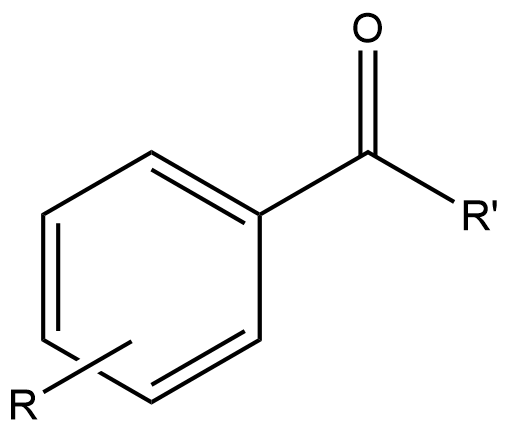
Aromatic carbonyl intermediates are compounds where a carbonyl group is directly attached to an aromatic ring, such as benzaldehydes, acetophenones, or quinones. They serve as building blocks for pharmaceuticals, agrochemicals, dyes, and advanced materials because the carbonyl group can be selectively transformed into alcohols, amines, olefins, or heterocycles. Their reactivity and the electron-withdrawing nature of the aromatic ring make them indispensable for constructing complex molecular architectures.
Look for evidence of consistent batch-to-batch purity, transparent sourcing, and a willingness to share technical data before purchase. A reliable distributor will offer reference samples, disclose the country of origin for raw materials, and have a clear process for handling quality complaints. You can also ask for recent customer references or audit reports to verify their claims.
Expect a certificate of analysis for every lot, a safety data sheet that is current and compliant, and data on residual solvents, heavy metals, and purity by HPLC or GC. If the compound is chiral or sensitive, the distributor should also provide enantiomeric excess or impurity profiles. Anything less indicates a lack of rigor.
Yes, many aromatic carbonyl intermediates are sensitive to light, moisture, or oxygen, and some can form peroxides or undergo aldol condensation under improper storage. A competent distributor will recommend inert atmosphere packaging, specify storage temperature ranges, and include desiccants or stabilizers when necessary. They should also label the material with a retest date and advise on safe handling procedures.
Transparency here is a strong trust signal. A distributor worth working with will show real-time stock levels, provide honest lead times that account for customs or production delays, and notify you immediately if a shipment will be late. If they keep safety stock for high-demand aromatic carbonyl intermediates or offer consignment inventory, that shows commitment to your production schedule.
Many do, but the quality of support varies widely. Ask whether they have in-house process chemists, pilot-scale reactors, and a track record of scaling from grams to kilograms without losing purity. A trustworthy partner will offer impurity profiling, design of experiments for critical parameters, and clear intellectual property terms before starting any custom project.
Refusing to supply a small evaluation sample, providing a certificate of analysis that looks templated or lacks batch-specific data, quoting prices far below market average without a credible explanation, and avoiding questions about supply chain traceability are all warning signs. Also watch for inconsistent communication or vague answers about regulatory compliance.
These compounds can be subject to controlled substance precursor rules, hazardous material transport regulations, and regional chemical inventories like REACH or TSCA. A knowledgeable distributor will know which aromatic carbonyl intermediates require export licenses, how to ship them safely under IATA or ADR, and when a compound falls under dual-use or narcotics precursor legislation. This expertise prevents costly customs delays and legal exposure.
Conclusion
In the aromatic carbonyl intermediate space, trust is not built on glossy brochures but on a paper trail that survives any audit. Top-tier distributors understand that every batch must be traceable from raw material to final shipment, with documentation that holds up under regulatory scrutiny. Yet paperwork alone is not enough. The best partners go beyond the certificate of analysis, running additional in-house testing to verify purity, residual solvents, and byproduct profiles that generic CofAs often miss. This proactive approach catches inconsistencies before they become production headaches, giving formulators confidence in every drum that arrives.
Equally critical is a distributor’s ability to keep your line running through safety stock programs tailored to your actual consumption, not arbitrary forecasts. When you need custom synthesis, you want direct access to chemists who can discuss route feasibility, scale-up risks, and realistic timelines—not a voicemail maze. For markets with evolving regulations, the right partner provides compliance roadmaps that anticipate changes in REACH, TSCA, or regional food-contact rules, so you are never caught off guard. Ultimately, a trustworthy aromatic carbonyl distributor combines rigorous documentation, hands-on technical support, and supply-chain foresight, turning a transactional relationship into a long-term operational advantage.
Contact Us
Contact Person: Wei Zhang
Email: [email protected]
Tel/WhatsApp: 862163529955
Website: https://www.dslchem.com